

Somebody in your family has already asked the question. Maybe it was your father, arms folded, looking at your phone like it personally owed him money. "So if the battery dies, we sleep outside?"
It's a fair question. It deserves a real answer, not a brochure.
Here's the thing about smart door lock safety: most articles on the topic are written by people trying to sell you a lock, which means they answer every concern with a cheerful "don't worry!" That's not useful. You're about to put a piece of electronics in charge of the one thing standing between your family and the street. You should be allowed to interrogate it properly.
So let's go through the actual worries, honestly, including the bits where smart locks genuinely have limits.
The Short Answer
Yes, a well-made smart lock is safe. In most real-world scenarios it's safer than the lock you have now.
But "well-made" is doing a lot of work in that sentence, and the reasons might not be the ones you expect. The biggest gains in smart door lock security have very little to do with technology and everything to do with removing the weakest link in your current setup, which is the key itself.
The honest case for smart locks for Indian homes isn't that they're futuristic. It's that the humble metal key is a genuinely terrible security device and we've all just made our peace with it.
Fear 1: "Someone Will Hack It"
This is the one everybody leads with, and it's the least likely thing that will ever happen to you.
Think about it from a burglar's point of view. To hack a lock, they'd need technical skill, specific equipment, physical proximity, and time standing conspicuously outside your door in a residential building with neighbours and watchmen and aunties who miss nothing. Or they could just break a window in four seconds.
Burglars are not hackers. They're opportunists. They go for open windows, weak wooden frames, and the fact that the vast majority of Indian homes still use a lock a determined person can pick or drill in under two minutes.
That said, digital door lock security does depend on you doing a couple of basic things:
- Change the default admin PIN. Immediately. Not next week.
- Don't use 123456, or your birth year, or your flat number.
- Use a strong password on your home Wi-Fi, because that's a far softer target than the lock.
- Keep firmware updated through the app when prompted.
- Look for real certifications like CE, RoHS, FCC and ISO 9001:2015. They're evidence that somebody independent actually tested the thing.
Do those five things and the hacking scenario stops being worth thinking about. Most digital door lock security failures in the real world aren't clever attacks. They're default PINs nobody bothered to change.
Fear 2: "The Battery Will Die and We'll Be Locked Out"
The honest answer: this is the most realistic concern on the list, and it's also the easiest one to defuse completely.
Here's how a decent lock handles it:
- A 4200mAh rechargeable pack typically runs four to six months on normal family use.
- The lock starts warning you well before it dies. Not once, but repeatedly, with app notifications and audible alerts, for weeks.
- Every quality lock includes a mechanical key override. There's a physical keyhole. It's usually hidden under a cover, but it's there.
- Many models accept emergency power from a standard power bank at the front panel.
So the failure sequence isn't "battery dies, you sleep outside." It's "lock nags you for three weeks, you ignore it completely, it nags harder, you still ignore it, and then you use the emergency key you sensibly left at your parents' place."
The only way to actually get locked out is to ignore several weeks of warnings and lose your backup key. Which, to be fair, is achievable. But that's a you problem, not a lock problem.
Practical tip: keep the emergency key somewhere outside the house. A car glovebox, a parent's flat, a trusted neighbour. Not in the drawer sitting behind the locked door, which is where roughly everybody keeps it.
Fear 3: "Can Someone Copy My Fingerprint?"
In a film, yes. In your building, no.
Modern fingerprint sensors on smart locks for Indian homes use capacitive or optical sensing that reads the electrical properties of living skin. A photograph won't work. A lifted print off a glass won't work in any practical sense. It requires laboratory conditions and a target worth that effort.
And here's the part that gets missed: your fingerprint can't be duplicated at the hardware shop for ₹40 by a bored teenager. Your key can. It probably already has been, at some point, by somebody you've forgotten about.
That's the real smart door lock security argument. Not that biometrics are unhackable, but that keys are quietly, casually copyable and nobody thinks about it.
Fear 4: "What About Break-Ins? Can They Just Force It?"
This is where good hardware separates itself from the ₹3,000 imports floating around online marketplaces.
What actually protects you:
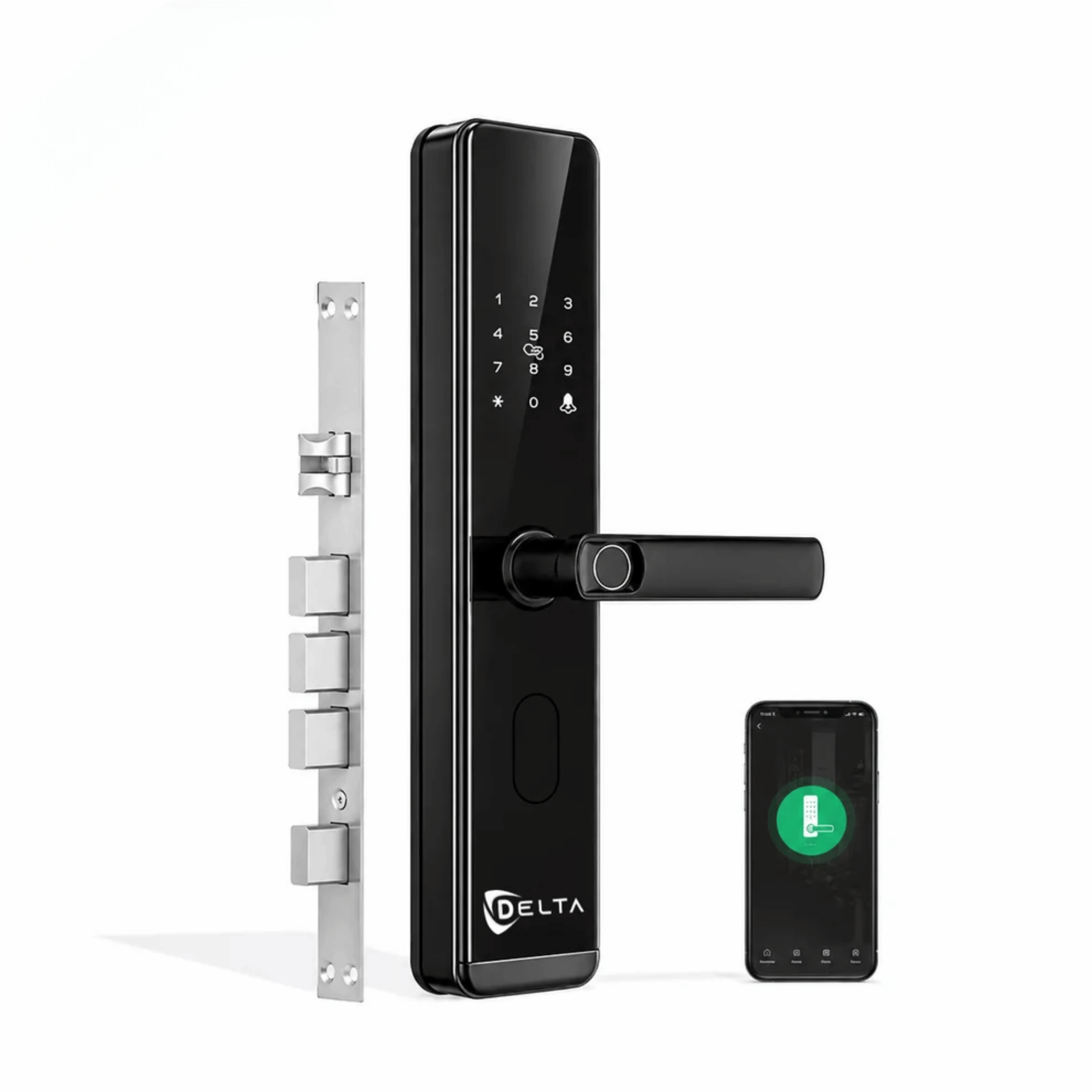
- Multiple bolts. A 5 bolt mortise spreads force across the frame rather than concentrating it on one point. Kicking the door becomes a project, not a moment.
- Build material. Space grade aluminium or zinc alloy bodies resist drilling and prying. Thin plastic housings do not.
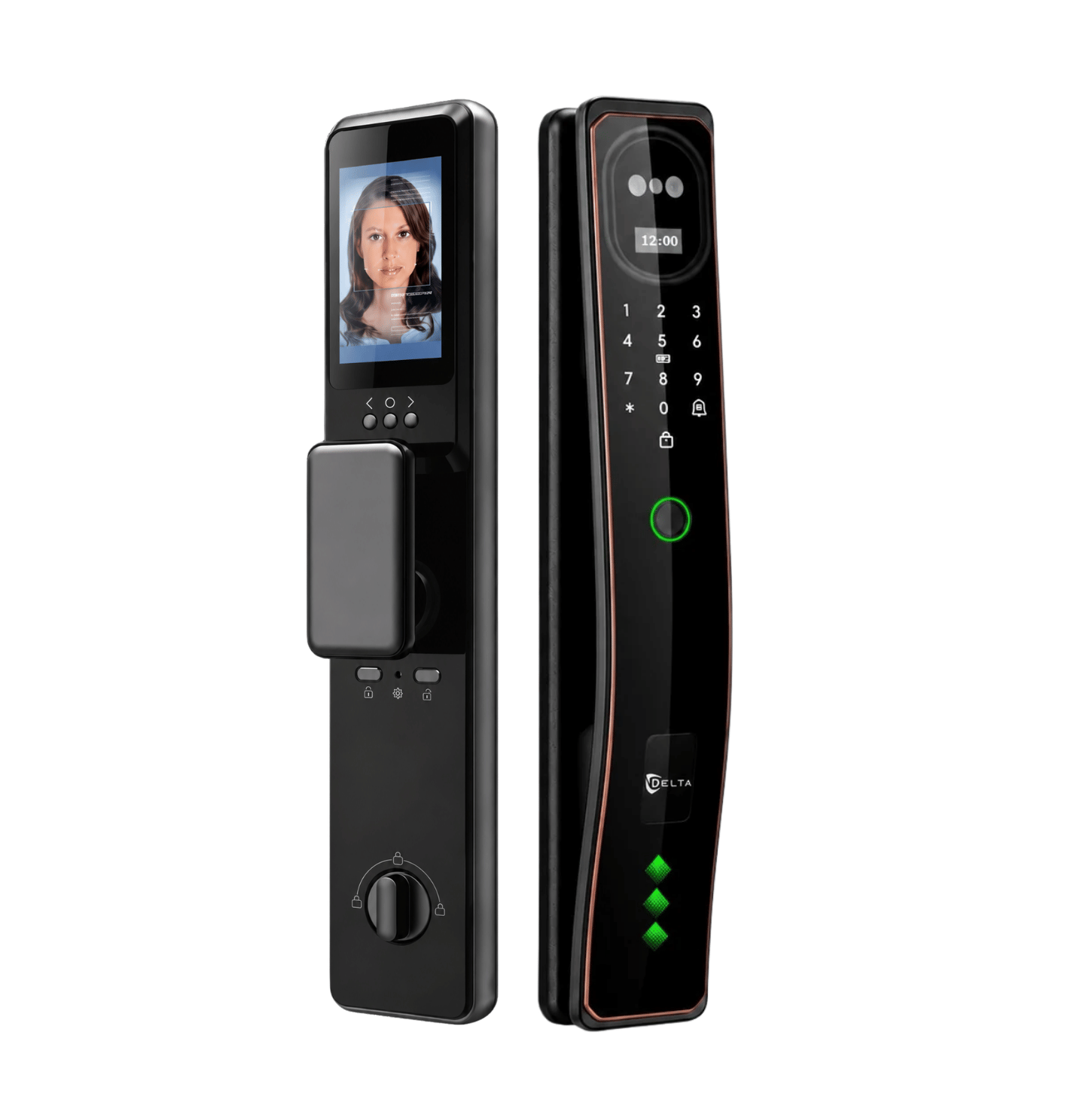
- Tamper alarms. This is the underrated one. Delta locks trigger an audible alarm and push a notification to your phone if someone tries to force or tamper with the lock. A burglar's entire business model depends on silence.
- Intruder alerts and open/close logs. You get told when your door opens, every time, wherever you are.
- Privacy lock mode. Blocks all external unlocking when you're inside.
Compare this honestly to your current lock, which does none of these things and cannot tell you anything at all.
Fear 5: "What If There's a Fire?"
Good question, and one people rarely ask until late. Honestly, it's the smart door lock safety issue that deserves the most attention and gets the least.
Look for locks that open from the inside with a single action. No PIN, no app, no fumbling. Any smart door lock India families actually live behind should let a panicking eight year old get out by pushing one handle in the dark.
Check this before you buy, and test it yourself on installation day. Make the technician show you.
Where Smart Locks Are Genuinely Weaker
I promised honesty, so here it is. Three real limitations:
- They depend on installation quality. A misaligned strike plate means a bolt that doesn't fully throw, and you'd never know from the outside. This is why professional installation matters more than the spec sheet does.
- Wet fingers fail. Just after a bath, or in heavy monsoon, fingerprint reads become unreliable. Not a security flaw, but an annoyance. Have a PIN ready.
- They add a maintenance habit. Ten minutes a quarter. Small, but it isn't zero, and a neglected lock does degrade.
Any brand claiming smart locks for Indian homes have zero downsides is selling, not informing.
What to Actually Check Before You Buy
If you're evaluating a smart door lock India has on the market right now, run through this:
- Mechanical key override present, and you've physically seen it
- Emergency power option at the front panel
- IP65 rating, because our weather is not gentle
- Tamper and intruder alarms included
- 2.4GHz Wi-Fi or Zigbee, with app notifications that work
- A real service network. An imported lock nobody can repair is a liability, not an asset
- Warranty in writing. Delta offers 2 years replacement plus lifetime tech support
That last point matters more than people realise. Strong digital door lock security isn't only about the hardware. It's about whether somebody answers the phone on the day something goes wrong.
The Verdict
Are smart door locks safe? Yes, meaningfully safer than what most of us currently have, provided you buy a properly built one and get it installed by someone who knows what they're doing.
The genuine risk with any smart door lock India sells isn't hackers. It's buying the cheapest thing on a marketplace listing, having a carpenter fit it approximately, and never touching it again.
Do it properly and smart door lock safety stops being a question you think about. Which, honestly, is the whole point. The best security is the kind that disappears into your routine and simply works, every time, without asking for your attention.
Your father can keep his spare key. He'll just never need it.
Explore Delta's range of smart locks and video door phones at deltahome.in. Free installation across 15,000+ pincodes, 2 year replacement warranty, and lifetime tech support.