

There is a very specific kind of helplessness that comes with being on a video call with your domestic worker standing outside your locked front door, both of you aware that the solution is a key that is currently sitting on your kitchen counter. Or the Sunday afternoon your mother-in-law arrives from out of town an hour before you get back, and her only option is to wait in the corridor because you forgot to leave a spare. Or the moment a plumber texts to say he is downstairs and you are forty minutes away in traffic with no way to let him in and no neighbor you trust enough to hand over your house key.
These are not edge cases. They are the ordinary friction of managing a home where multiple people need access and only one set of keys exists. And they are entirely unnecessary problems to have in 2025, when a smart door lock India homeowners can actually rely on has become both affordable and genuinely well-designed for how Indian households work.
This guide is for anyone thinking seriously about keyless access, whether you are buying your first smart lock for your home or trying to figure out which features actually matter and which are just impressive on a spec sheet.
Why the Key Is the Wrong Tool for the Job
The physical key was designed for a simpler version of domestic life. One household, one set of residents, a predictable daily schedule, and a front door that only needed to open and close for people who lived there. That description covers a shrinking percentage of Indian households today.
Modern Indian homes have domestic workers who come on weekday mornings. Older parents who may visit for extended stays. Children who arrive home from school before anyone else. Delivery executives, plumbers, electricians, and maintenance staff who need supervised access during the day. Friends staying over for a few days. Each of these people represents a key management problem: do you cut a duplicate, and if so, what happens to it afterward?
The answer most Indian homeowners have landed on is an improvised mix of duplicate keys, hidden spares, and informal arrangements that create exactly the kind of access ambiguity that makes homes less secure. A keyless door lock does not just make entry more convenient. It replaces an inherently porous access system with one that is controlled, logged, and revocable at any time.
What Access Without Keys Actually Looks Like
The phrase keyless access can conjure images of complicated setups with apps that need updating and biometric sensors that fail on rainy mornings. The reality of a well-designed smart lock for the home is considerably more straightforward.
Your fingerprint is enrolled during installation. After that, coming home means a half-second tap on the sensor, and the door opens. Your teenager has their own fingerprint registered. Your spouse has theirs. Your elderly parent who visits regularly has a PIN they chose themselves. Your domestic worker has a time-bound code that works only on weekday mornings between seven and eleven, and automatically stops working the moment that window closes. A visiting relative gets a one-time OTP you generate from your phone that expires when they leave.
Every one of these access events is logged with a timestamp. From your phone, you can see exactly when the door was opened, by whom, and how. If the door is left unlocked, the auto-lock feature closes it on a timer you set. If anyone tries to tamper with the lock, your phone receives an alert within seconds. This is what smart home security India has moved toward: not just a lock, but a complete access management system for the front door of a living, dynamic household.
The Features That Actually Matter for Indian Homes
Not every feature listed on a smart lock specification sheet is equally relevant to how Indian families actually live. Here is what deserves genuine attention.
The fingerprint sensor quality is the first thing to evaluate carefully. Cheap sensors struggle with dry skin, wet fingers, and the fingerprints of elderly users whose ridges are less defined over time. A good fingerprint door lock India families can depend on uses a high-quality acquisition system that adapts its recognition accuracy as usage increases, works reliably across a range of skin types and age groups, and authenticates in under half a second. This matters enormously in a household where a grandparent uses the front door every single day.
Offline operation is the second feature that separates thoughtfully designed products from ones built for markets with stable infrastructure. Indian homes deal with power fluctuations, Wi-Fi outages, and internet instability as a routine reality. A digital door lock India homeowners can trust should function entirely without internet connectivity as its default state, using local authentication rather than cloud dependency. Remote access via Wi-Fi is a valuable addition, but it should enhance the product, not be the condition under which it works.
Weather resistance is often overlooked in buying decisions, but becomes very obvious over time. A smart door lock installed on an external main door in India will face monsoon humidity, peak summer temperatures that can cross forty-five degrees in many cities, and dusty winters. Hardware that is not rated and tested for these conditions will degrade noticeably within a year or two.
Temporary access management is the feature Indian households use more than almost any other, and it deserves to be evaluated practically rather than theoretically. Can you generate a one-time code in under a minute from your phone? Can you set a time window for recurring access that activates and deactivates automatically? Can you revoke an existing access code remotely without needing to physically touch the lock? If yes to all three, the lock is genuinely built for how Indian home management works.
The Household Scenarios: These Changes
It is worth walking through the specific situations where a smart door lock India families choose transforms daily life, because the value is in the details.
When both adults in a household work full-time and children come home from school to an empty flat, the traditional solution is to give a child a key and hope it does not get lost, stolen, or forgotten at school. A fingerprint door lock that Indian families have adopted removes this anxiety entirely. The child's fingerprint gets them in. There is no key to track. The parent gets a notification the moment the door opens, confirming the child arrived safely.
When a domestic worker joins the household, the old approach means cutting a key and handing it over with the implicit understanding that it will probably never come back when she leaves. A smart lock for the home gives her a time-bound PIN that works only during her scheduled hours. When she leaves the job, her access is removed from the app in two taps. No awkward conversation about key returns, no lingering security concern.
When you travel for a week and need someone to check on the flat, water the plants, or collect a parcel, a best smart lock India setup lets you grant them access for a specific window, watch the entry event log in real time from wherever you are, and revoke access the moment it is no longer needed, all without cutting a key or hiding one under a doormat.
When your parents stay for a month, and your mother finds the fingerprint sensor unfamiliar, she uses the PIN she has always known, because a well-designed smart lock for the home offers multiple access methods on the same device and does not require everyone to interact with it the same way.
What to Look For in Terms of Build and Security
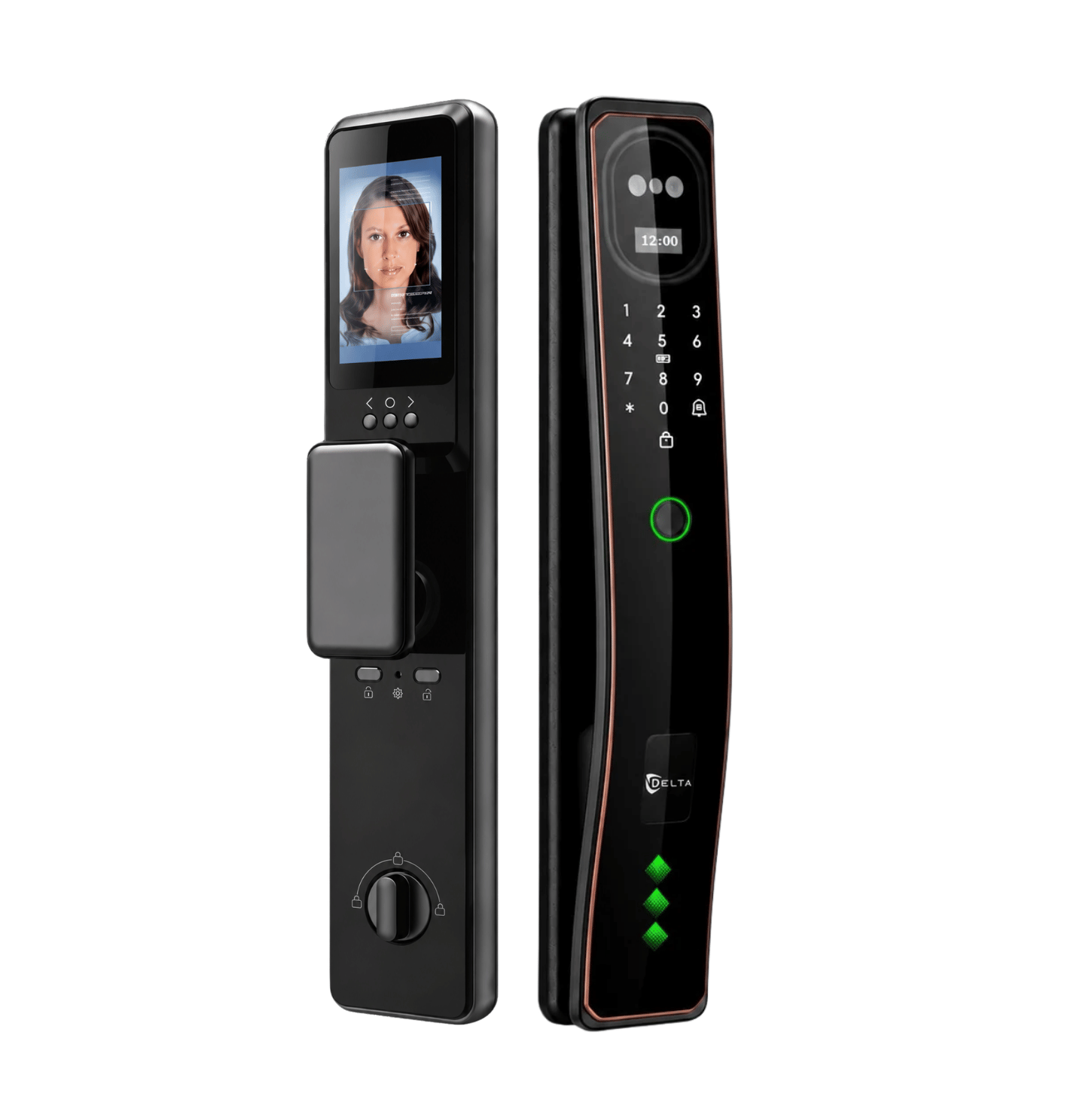
Convenience features attract the most attention in smart lock marketing, but the underlying security architecture is what actually protects the household. A good digital door lock India buyers should prioritize has a lock body CNC-machined from high-grade aluminum alloy, which resists forced entry significantly better than pressed or assembled components. The keypad should have an anti-peep feature that randomizes the display to prevent someone from inferring your PIN by watching your finger movements. For models with face recognition, liveness detection that can distinguish a real face from a photograph matters for ruling out spoofing attempts.
Real-time tamper alerts that reach your phone immediately when someone interferes with the lock are an essential baseline, not a premium feature. Battery management should include low-battery notifications sent to your app well before the issue becomes critical, an emergency USB charging port that allows a power bank to jump-start the lock externally, and a mechanical key backup that works in any scenario as a final fallback.
How Delta Home Approaches This Problem
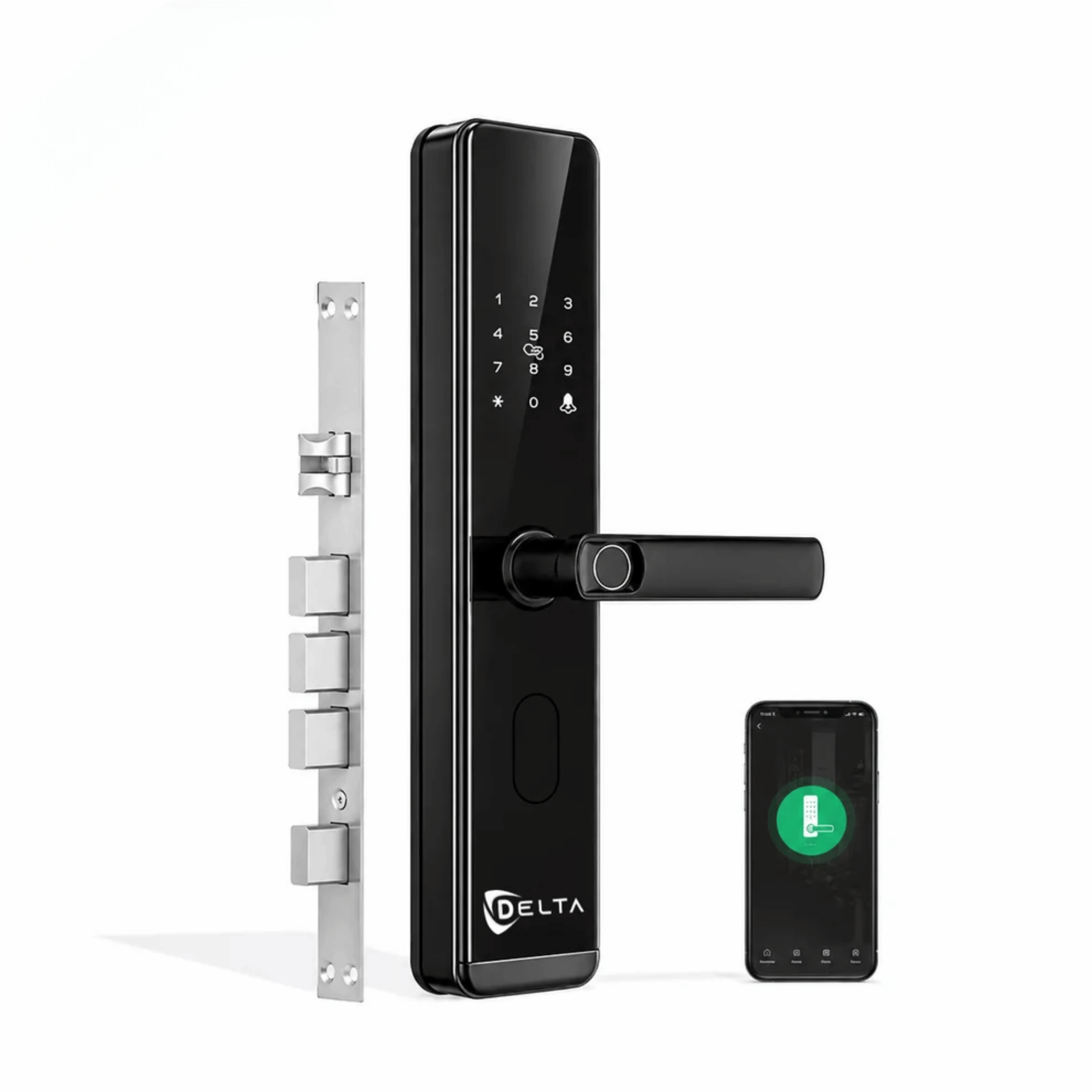
Delta Home has built its range specifically around the access management realities of Indian households. Every product in the lineup offers multiple access methods so that different household members can use what suits them: fingerprint via the Swiss FPC acquisition system that adapts recognition over time, PIN, RFID card, one-time OTP, and mechanical key backup. Mid-range and premium models add app connectivity for remote access and monitoring, and the X30 and X90 add 3D face recognition with liveness detection for households where biometric accuracy at the premium end matters.
The entire range is built offline-first, which means core authentication never depends on a Wi-Fi connection being available. Hardware is constructed from military-grade aluminum alloy with weather resistance rated for Indian outdoor conditions. Installation is carried out by Delta Home's own trained technicians across metro cities and Tier 1, 2, and 3 cities, confirmed within 48 working hours of the request. A 2 to 3-year replacement warranty and 24/7 emergency support back every product after installation.
The Practical Reality of Making the Switch
The adjustment to keyless living is faster than most Indian households expect. Within a week, the new routine is second nature. Within a month, the idea of managing physical keys feels like an unnecessary overhead that no longer needs to exist.
What does not change is the door itself or the act of walking through it. What changes is everything around that moment: the security of knowing exactly who has access and when, the peace of mind of receiving an alert if anything unusual happens, the convenience of letting someone in remotely without being there, and the simple daily ease of coming home with both hands full and the door recognizing you before you even slow down.
The households that have already made this shift are consistent about one thing in their feedback: the question is not whether it was worth doing. It is why they waited as long as they did.
To explore the full range of smart home security India products and find the model that fits your door, your family, and your budget, visit deltahome. in.