

Think about the last time you stood at your door, hands full, digging through your bag for the house keys. Or the morning you drove halfway to work before turning back because you could not remember if you had locked up. Or on Sunday afternoon, a plumber needed access while you were out, and the only solution was hiding a key under the doormat and hoping nobody else found it first.
These are not dramatic problems. They are small, recurring frustrations that add up across days and years. And across India, millions of homeowners are quietly arriving at the same conclusion: the traditional key has had its time, and it is time to move on.
Keyless living in India is no longer a futuristic concept reserved for tech-forward apartments in metro cities. It is a practical, affordable, and increasingly common upgrade that Indian families of every background are making, and the shift is accelerating faster than most people realize.
The Key Is the Weakest Link in Your Home Security
Here is something worth sitting with for a moment. The traditional lock and key system that most Indian homes still rely on was not designed with modern security threats in mind. Keys can be duplicated at any local hardware shop in under ten minutes. A key under the doormat or a spare with a neighbor is a security vulnerability that burglars know to look for. A lock that can be picked or bumped with basic tools offers far less resistance than homeowners assume.
Smart home security in India is growing partly because homeowners are becoming more aware of these weaknesses. A smart door lock in India eliminates the key as the primary point of failure. There is no key to duplicate, no key to lose, no key to hand to someone and never get back. Authentication happens through something you are (your fingerprint or face), something you know (a PIN), or something you have (your phone), all of which are significantly harder to compromise than a cut piece of metal.
The shift toward smart security for the home is not just about convenience, although that matters too. It is about a more honest reckoning with what traditional security actually provides versus what we assume it does. Investing in smart home security in India today means making a deliberate choice to move from a system built on assumptions to one built on verified, controlled access.
Why Indian Households Are Especially Well-Suited for Smart Locks
One of the most interesting things about the adoption of smart home devices in India is how well they map onto the realities of Indian household life. Indian homes are not just places where two or three people sleep. They are dynamic, multi-generational spaces where grandparents, parents, children, and domestic help all move in and out on different schedules.
Managing key access in this kind of household is genuinely complicated. You make a duplicate for the domestic help, and then she leaves six months later, and you never get the key back. Your teenager loses their key twice in a semester, and you spend the evening calling a locksmith. Your elderly parent cannot always manage the physical effort of a stiff lock at the end of a long day.
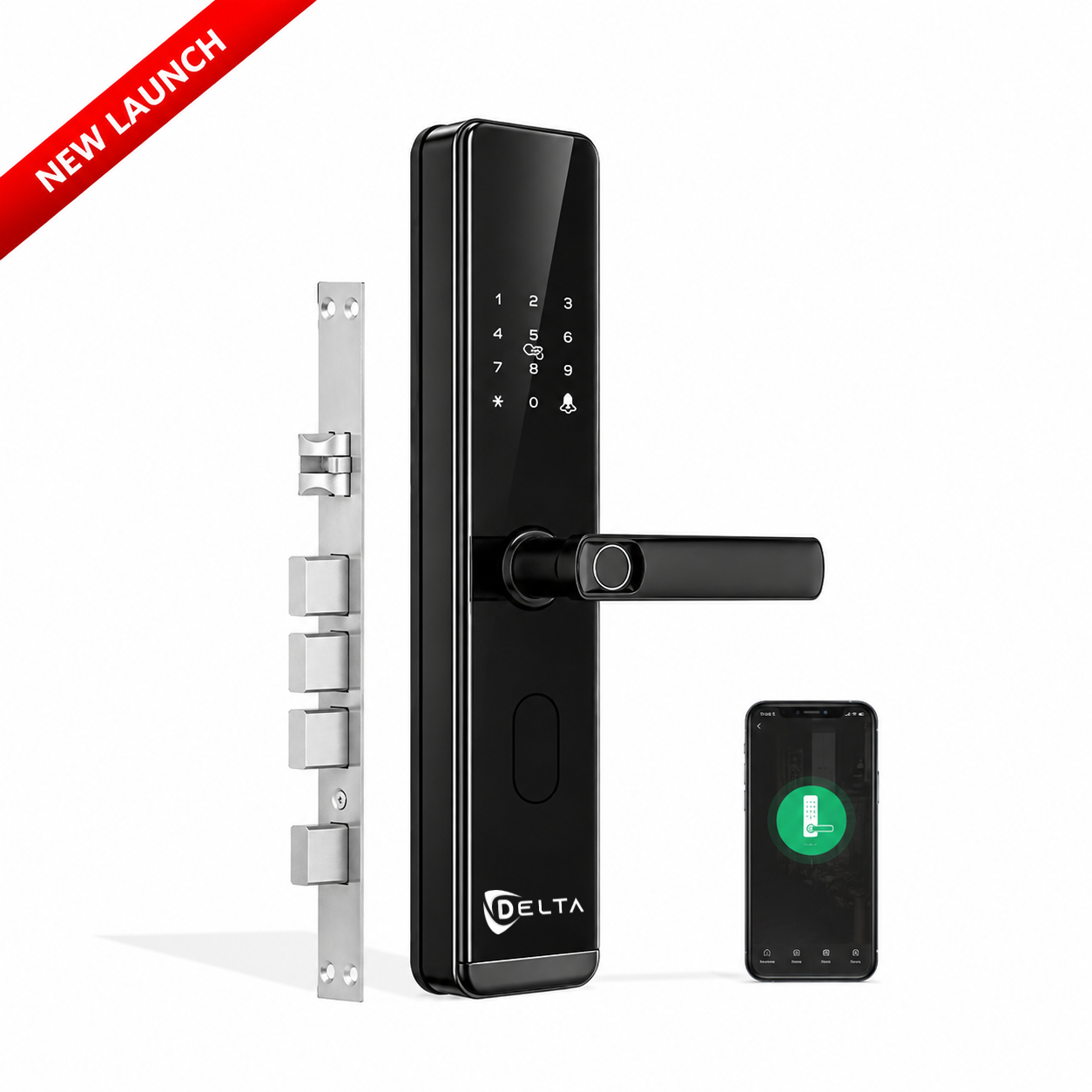
A keyless door lock in India solves all of these problems at once. You give the domestic help a time-bound PIN that stops working on her last day without any awkward conversation about key returns. You give your teenager a fingerprint profile that cannot be lost or misplaced. You set an auto-lock so the door secures itself even when your parent forgets. Access is managed, logged, and controllable from your phone regardless of where you are.
This is not just a convenience upgrade. For many Indian families, a keyless door lock in India is a meaningful reduction in the daily administrative overhead of running a household, and a genuine leap forward in smart security for the home that pays off from day one.
The Role of Indian Conditions in Driving Smart Security Adoption
There is a specific set of Indian realities that has pushed keyless living India further and faster than in many other markets. Urban apartment living has created a new kind of security consciousness. With hundreds of families in the same building, shared elevator access, and delivery riders and service providers regularly entering residential complexes, knowing exactly who has accessed your door and when matters more than it did a generation ago.
Frequent travel is another driver. India has one of the world's most mobile middle-class populations, with professionals regularly traveling for work and families visiting relatives across cities. Being away from home for days or weeks while someone else needs controlled access is a scenario that a traditional key system handles poorly and a smart door lock in India handles elegantly. You grant access remotely, receive real-time alerts when the door is unlocked, and revoke that access the moment it is no longer needed.
The growth of nuclear families in Indian cities is also a factor. A household where both adults work full-time, children come home from school before parents return, and domestic help arrives during office hours has a genuine need for a system that manages access without requiring anyone to be physically present with a key.
Smart Home Security in India: From Single Locks to Connected Homes
The conversation around smart home security in India has evolved considerably over the last few years. Early adopters bought a smart lock as a standalone device. Today's buyers are increasingly thinking about how a smart door lock connects to a broader ecosystem of smart home devices in India, from video doorbells and security cameras to smart lighting and intercom systems.
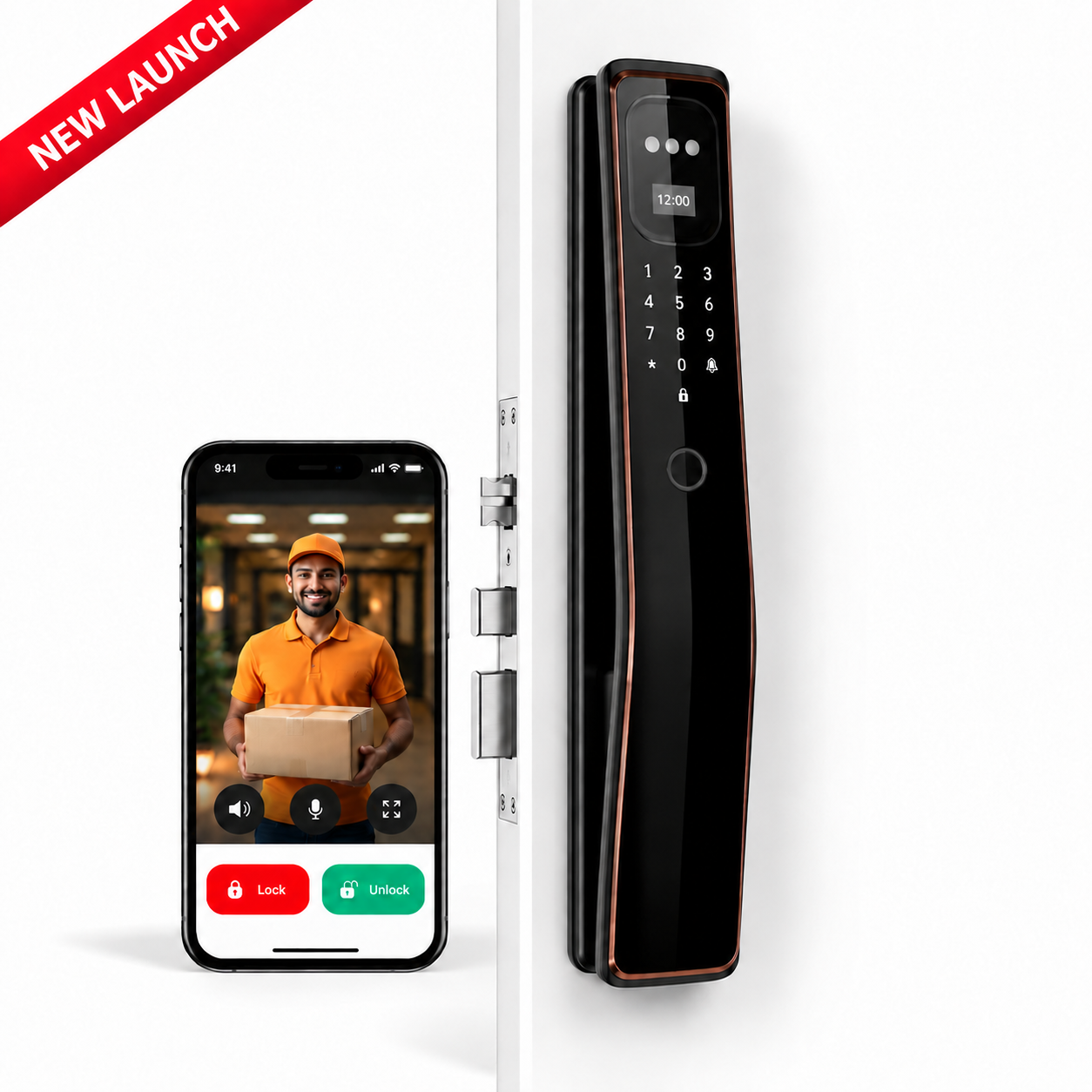
Delta Home has been at the forefront of this evolution. Their premium models integrate built-in HD video doorbells, two-way voice intercom, real-time tamper alerts, and smart home automation linkage through Zigbee connectivity. The X90 model, for example, combines face recognition, palm vein biometric authentication, and a live-view camera into a single device that functions as both a lock and a security hub for your front door.
This convergence of functions matters because it simplifies the smart home experience significantly. Instead of managing multiple devices and apps, homeowners get integrated security and access control from a single, well-designed unit. For Indian buyers who are building their smart home setup incrementally rather than all at once, a smart lock that can serve as the anchor of a broader system is a more compelling investment.
The Practical Reality of Keyless Living for Indian Families
What does keyless living actually look like day to day for an Indian family that has made the switch? It is quieter and simpler than most people expect.
The morning rush is calmer because nobody is hunting for keys. Coming home with groceries means a tap on the fingerprint sensor rather than a juggling act at the door. When the plumber arrives, you send a one-time code from your phone that expires automatically. When you go on holiday, you can check from anywhere whether the door is locked, grant access to someone you trust for a specific time window, and receive an alert if anyone tampers with the lock.
The adjustment period is shorter than most people anticipate. Within a week of installation, the new routine becomes second nature. Within a month, the idea of going back to keys feels genuinely inconvenient.
Why Delta Home Leads the Smart Lock for Indian Homes Category
Not all smart locks are designed with Indian households in mind, and the difference shows in how they perform over time. Smart lock for Indian homes means designing for monsoon humidity, extreme summer heat, dusty winters, variable door thicknesses and orientations, multi-generational user needs, and the realities of Indian internet and power infrastructure.
Delta Home has built its entire product range around these considerations. Military-grade aluminum alloy construction, IP-rated weather resistance, offline-first operation that does not depend on internet connectivity, adaptive fingerprint sensors that work accurately for elderly users, universal door handle settings for left and right orientations, and a professional installation and after-sales support network that covers metro cities and Tier 1, 2, and 3 cities across India.
The result is a digital door lock for the home that works as well on day 730 as it does on day one, regardless of what the Indian climate throws at it. Whether you are installing a single digital door lock for your home or outfitting an entire building, Delta Home has a model built for the job. Backed by a 2 to 3-year replacement warranty and a 24/7 support line, Delta Home smart locks are not just a product purchase. They are a long-term commitment to making your home more secure, more convenient, and more connected.
If keyless living in India has been on your mind, there has never been a better time to make the move. Visit deltahome. in to explore the full range and find the right model for your home and your family.