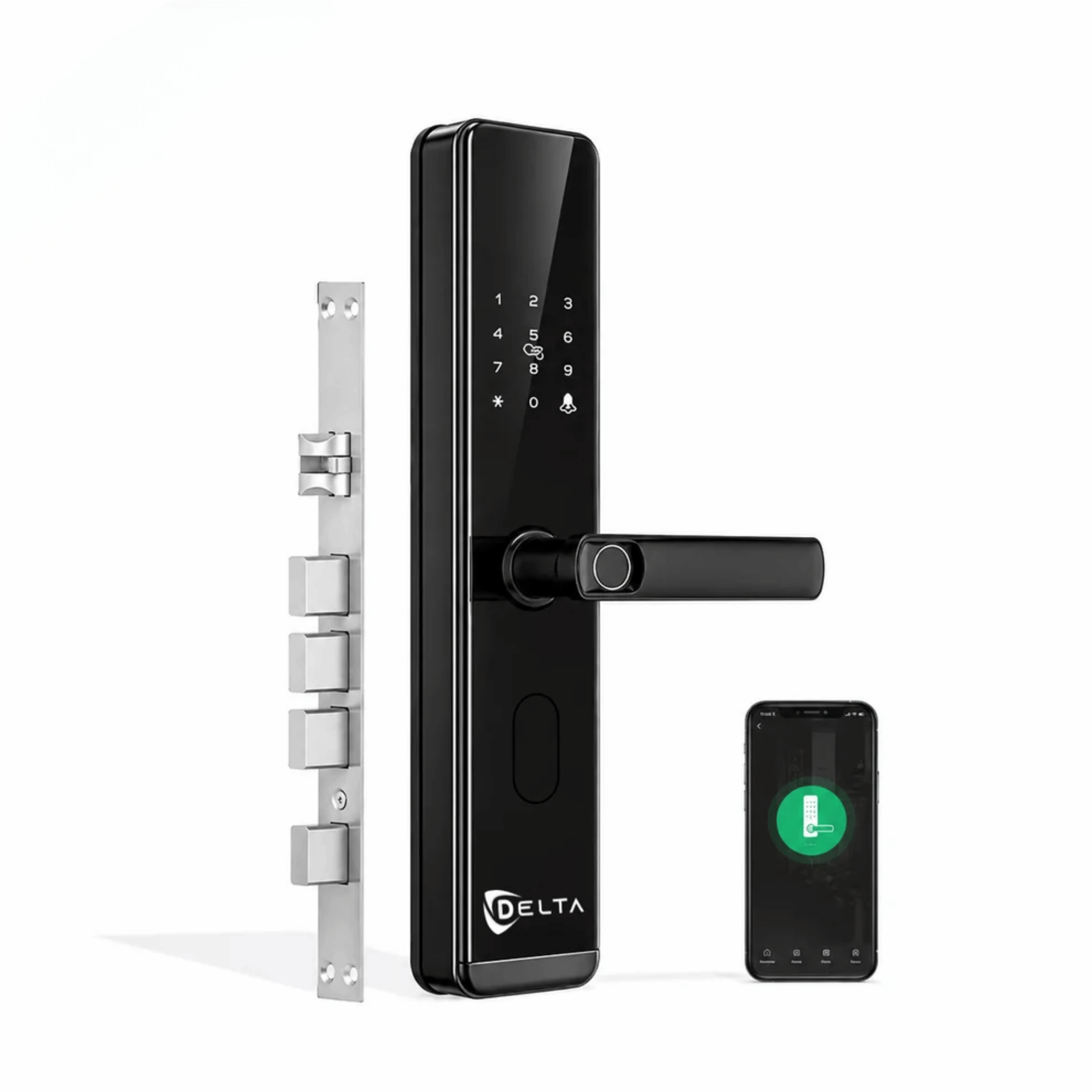
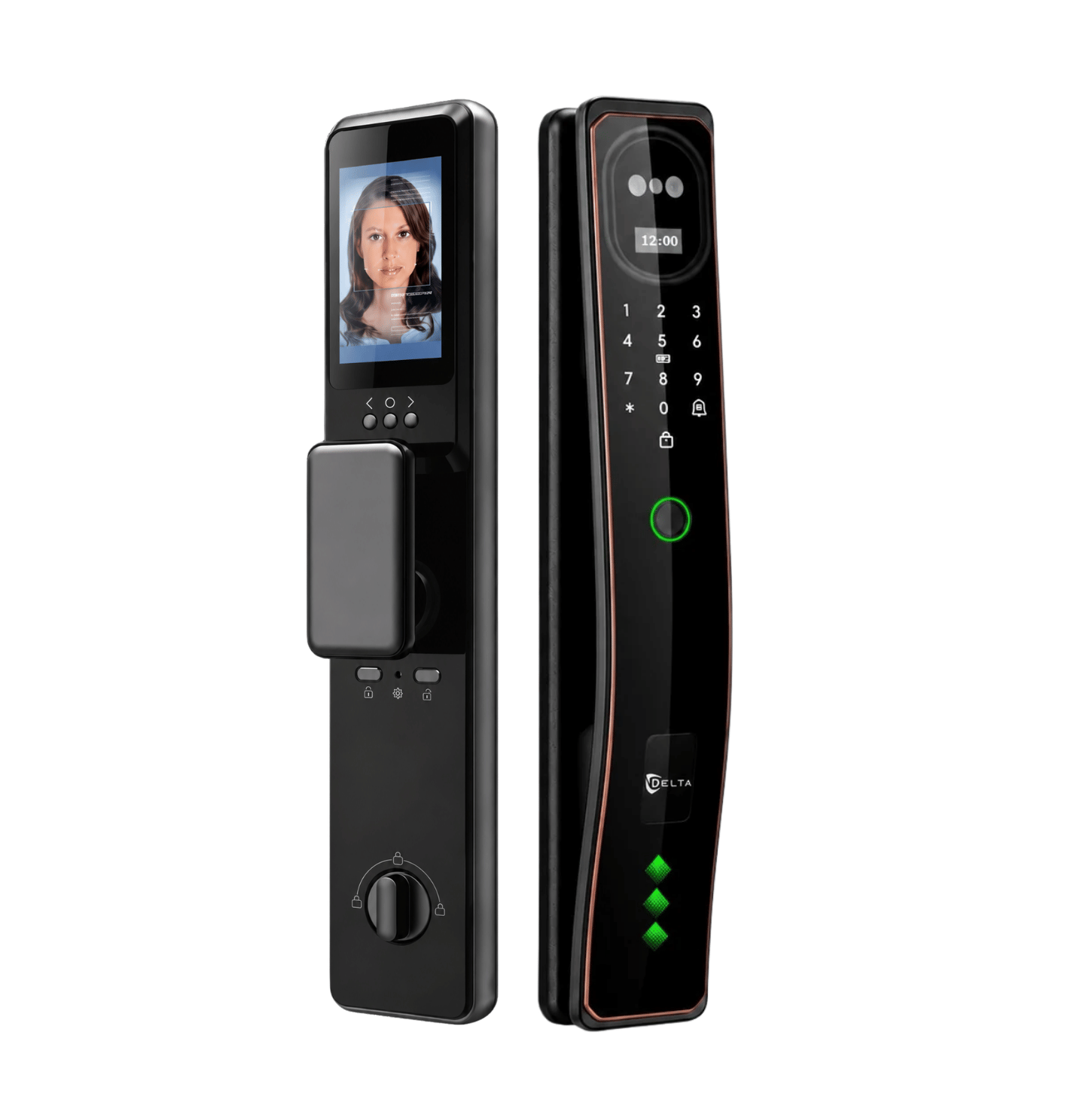


There is a version of the smart lock conversation that stays entirely on the surface: the convenience of keyless entry, the elegance of a touchscreen panel, the satisfaction of opening your front door with a fingerprint. These are real benefits, and they are a legitimate part of why Indian homeowners are making the switch. But they are not the most important part of the conversation.
The most important part is security. And when it comes to smart lock security, the gap between a product that looks secure and one that actually is can be significant. The smart lock category has grown fast enough that the market now contains products at every price point, from those with genuinely robust security architecture to those that wrap a weak system in an attractive housing and call it innovation.
Understanding the smart lock safety features that matter, and knowing how to tell whether a product actually has them rather than merely listing them in a brochure, is the difference between a home that is more secure after installation and one that has simply replaced one weak point with another.
Tamper Alerts: Your First Line of Real-Time Awareness
A traditional lock gives you no information about what happens to it when you are not there. Someone can spend ten minutes trying to pick it, force it, or drill it, and you will only know something happened when you see the damage. A smart door lock security feature that changes this fundamentally is real-time tamper detection.
A well-designed secure smart door lock has sensors embedded in the body that detect any attempt to interfere with the lock physically: impact, drilling vibration, attempts to pry the faceplate, or sustained pressure on the bolt. The moment any of these are detected, the system sends an alert to your smartphone immediately. Not after the fact, not in a daily summary, but in real time while the attempt is still happening.
This matters enormously for Indian homes where the occupants are often away during the day. A working couple, a family on holiday, a senior citizen who steps out in the morning: all of them benefit from knowing that any interference with their front door reaches their phone within seconds. The tamper alert does not just inform you after something has gone wrong. It gives you the window to respond while there is still something to be done.
When evaluating any smart door lock safety product, the tamper alert system deserves scrutiny. Does it distinguish between different types of interference? Does the alert reach the phone in real time, or is there a delay? Can it be tested during installation so you know with certainty that it works? These are the questions that matter.
Anti-Peep Technology: The Threat Most Buyers Never Think About
PIN-based entry is one of the most commonly used access methods on a smart lock for home security, and for good reason. It requires no hardware beyond a keypad, works reliably for household members of every age, and can be changed instantly if it is ever compromised. But a PIN that someone watches you enter is a PIN that is no longer private.
Shoulder surfing, the practice of observing someone entering a PIN from close range, is a genuine security risk in Indian residential settings. Shared elevator banks, narrow corridors, and the proximity of neighbors in dense apartment buildings all create situations where someone nearby could observe a PIN being entered and retain it.
Anti-peep technology addresses this by randomizing the position of digits on the touchscreen keypad each time the PIN entry screen is activated. The actual PIN stays the same, but the digits appear in a different arrangement every time, which means an observer watching your finger movements cannot determine what sequence you entered. The physical gesture changes with every use, even though the underlying code does not.
This is a smart lock safety feature that sounds like a minor detail until you consider the alternative. A PIN entry system without anti-peep protection is only as secure as the privacy of every entry event, which in a busy Indian apartment building is not something you can guarantee. Anti-peep turns the PIN system into a genuinely private authentication method regardless of who is nearby.
Liveness Detection: Why Face Recognition Is Only as Good as Its Spoofing Protection
Face recognition as an access method has become a standard offering in mid-range and premium smart door lock security products, and when implemented properly, it is one of the most convenient and secure authentication methods available. The concern that comes with it is spoofing: the question of whether someone could hold a photograph of your face in front of the sensor and gain entry.
A face recognition system without liveness detection cannot answer that question confidently. It can map the facial geometry in front of it accurately, but it cannot reliably determine whether what it is seeing is a living person or a high-quality printed image.
Liveness detection solves this by analyzing the three-dimensional characteristics of the face rather than just the two-dimensional image. Structured light technology that maps facial features across tens of thousands of points with millimeter-level depth information makes it functionally impossible to spoof the sensor with a photograph, because a photograph has no depth. The system is specifically looking for the three-dimensional structure of a real face, and a flat image cannot provide it.
For smart door lock safety evaluation, the question to ask about any face recognition product is not whether it has face recognition, but whether its face recognition includes liveness detection. Without it, the feature is convenient but incomplete from a security standpoint. With it, face recognition becomes one of the most robust access methods available on a secure smart door lock.
Encryption and Access Log Integrity: The Digital Security Layer
Physical security features are visible and intuitive. Digital security features are less obvious but equally important for anyone thinking seriously about smart lock security. The communication between a smart lock and the smartphone app that controls it passes through a digital channel, and the integrity of that channel matters.
A well-built smart door lock security system encrypts all communication between the lock hardware, the mobile app, and any cloud services involved. This means that even if someone were to intercept the data being transmitted, they would receive encrypted information that cannot be decoded without the correct key. For remote access functions, Wi-Fi-connected models, and any lock that logs access events to the cloud, encryption is the baseline that makes those functions trustworthy rather than just functional.
Access logs themselves are a security feature worth treating seriously. A smart lock for home security that maintains a complete, timestamped record of every entry event, every failed authentication attempt, and every change made to access credentials gives the homeowner a genuine audit trail. If something unexpected appears in the log, such as a code being used at an unusual time or a failed fingerprint attempt repeated multiple times, it surfaces information that a traditional lock would never provide. This log is only as useful as its integrity, which is why tamper-proof storage and encrypted transmission of log data matter alongside the logs themselves.
Auto-Lock: The Safety Feature That Works While You Are Not Thinking About It
Of all the smart lock safety features available, auto-lock is the one that probably prevents the most incidents simply by removing human error from the equation. A door that locks itself on a timer you set does not depend on anyone remembering to lock it. It just does.
Indian households have busy mornings, distracted evenings, and the universal human tendency to occasionally walk out of the front door without completing the last step of securing it. Auto-lock sets a defined window, typically between thirty seconds and five minutes after the door closes, and engages the bolt automatically when that window expires. The door is locked, whether anyone thought about it or not.
This feature matters especially in households with children, elderly members, or high foot traffic during certain hours. It also matters for homeowners who travel, because the auto-lock log confirming the door secured itself after the last exit is a form of peace of mind that has no equivalent in a traditional lock system. A smart door lock safety system that includes auto-lock and sends a confirmation notification when it activates covers the single most common gap in everyday home security: the unlocked door nobody notices.
Emergency Backup Systems: Security That Holds Even When Technology Fails
A robust smart lock for home security accounts for the scenarios where the primary systems are unavailable. Battery depletion, sensor malfunction under unusual conditions, a phone that is lost or out of charge: a product built with genuine security thinking includes layered backup access that ensures the home is never inaccessible or, equally importantly, never unsecured because a primary system failed.
The standard that the best products meet includes three layers. A low-battery alert sent to the smartphone when the battery reaches a defined threshold, well before the issue becomes critical, gives the homeowner time to replace the batteries on a normal schedule. An emergency USB charging port on the exterior of the lock body allows a power bank to provide enough charge to operate the lock for several cycles, covering the scenario where the battery runs completely flat unexpectedly. And a mechanical key override provides a physical fallback that works regardless of battery level, connectivity, or any other system state.
These are not admissions of weakness in the design. They are the marks of a security product that has been thought through to its edges rather than only its center. A secure smart door lock that fails gracefully in edge cases is more trustworthy than one that works perfectly under normal conditions and leaves the homeowner stranded when anything deviates from normal.
Why Delta Home Builds Security Into Every Layer
The smart door lock safety features described above are not optional additions in the Delta Home range. They are built into the product architecture from the ground up, because a lock that is trusted to secure an Indian family's home every day needs to be reliable at every layer simultaneously.
Tamper detection with real-time smartphone alerts. Anti-peep randomized keypads. Liveness detection on 3D face recognition models. Encrypted communication and access log integrity. Auto-lock with configurable timers. A three-tier emergency backup system of low-battery alerts, USB jump-start capability, and mechanical key override. Military-grade CNC-machined aluminum alloy lock bodies that resist forced entry. IP-rated weather resistance for Indian outdoor conditions.
Delta Home's X30 and X90 premium models bring together biometric authentication at the highest current level of accuracy, built-in HD video doorbell integration, and smart home automation linkage, all within a single hardware unit that has been designed, tested, and supported specifically for Indian doors and Indian conditions.
A 2 to 3 year replacement warranty and 24/7 emergency support backs every product after installation, with professional installation by trained technicians confirmed within 48 working hours across metro cities and Tier 1, 2, and 3 cities.
The front door of an Indian home carries more responsibility than any other single piece of hardware in the building. The smart lock security features behind it deserve to be chosen with the same seriousness. To explore Delta Home's full range and understand which model fits your home and your security requirements, visit deltahome. in.