

Five years ago, a smart lock in an Indian home was a conversation piece. Guests would arrive, notice it, and ask about it. You'd demonstrate. Somebody's uncle would predict it would fail within a year.
In 2026, nobody notices. Which is the clearest sign of how much has changed.
Technology has crossed the line from novelty into infrastructure, and the interesting question is no longer "should I get one." It's "which of these features actually matter, and which are just this year's sticker on the box." Because plenty of what gets marketed as smart lock trends 2026 is genuinely useful, and some of it is nonsense with a price tag.
Here's an honest read on what Indian homeowners are actually choosing right now, and why.
Trend 1: Face Recognition Went Mainstream
This is the headline shift. Three years ago, a face recognition door lock India could actually buy was either absurdly expensive or unreliable enough to be irritating. Both problems have largely been resolved.
What changed technically:
- 3D depth sensing replaced 2D cameras. The old ones could be fooled by a photograph. The current generation reads facial geometry, so a printed photo does nothing.
- Speed got usable. You walk up, the door opens. No pause, no standing there arranging your face.
- Low light stopped being a problem. Infrared handles a dark landing at 11pm.
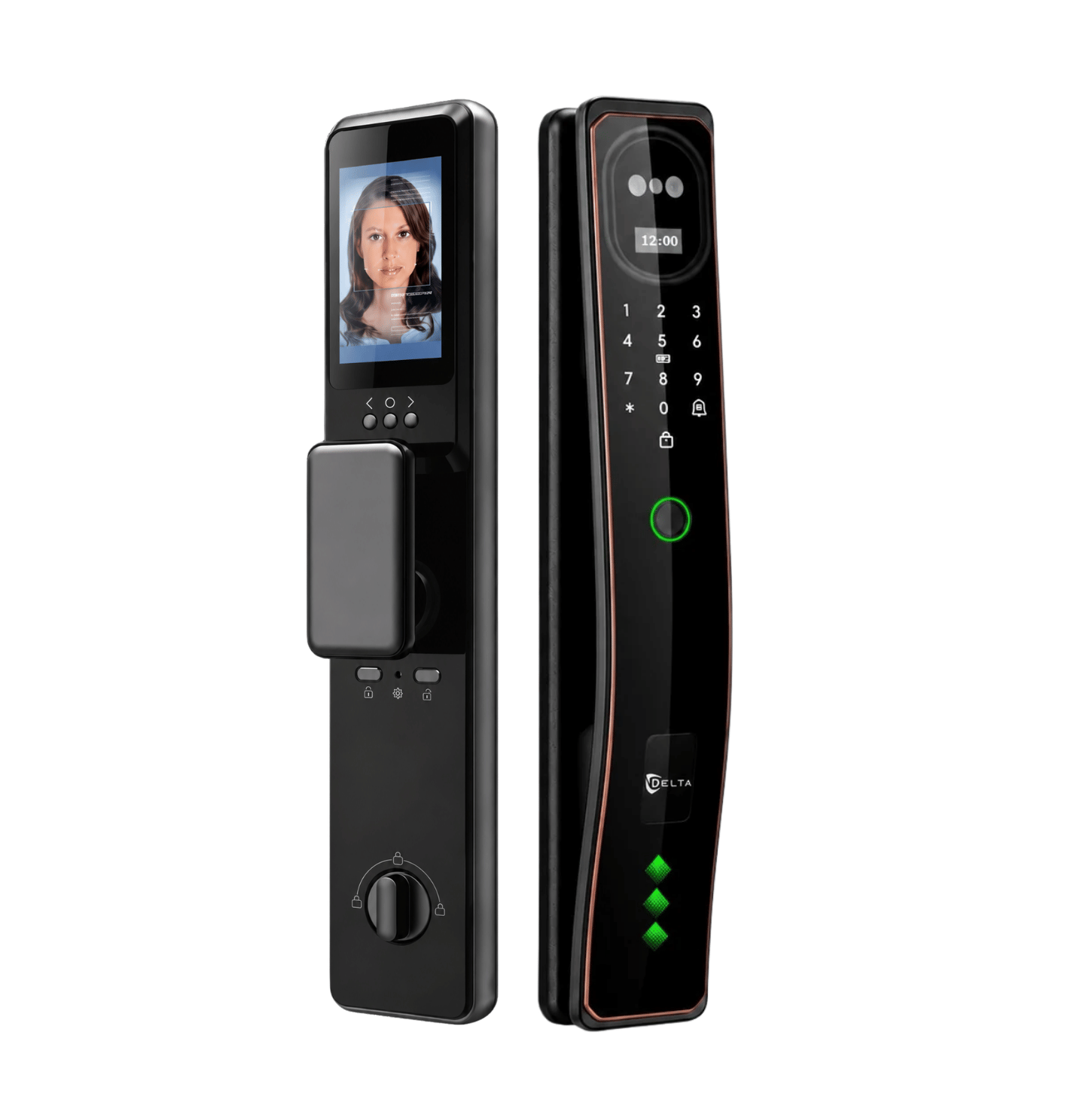
Delta's X90 Ultra AI sits at the top of this category, pairing 3D face recognition with palm vein recognition, which reads the blood vessel pattern under your skin. That one is genuinely hard to spoof, because you cannot leave your veins on a doorknob.
Who's actually buying it: families with elderly parents, mostly. Fingerprints degrade with age and with dry skin, and a lot of people over seventy struggle with sensors. A face recognition door lock India households share across three generations sidesteps that entirely. It's the accessibility argument, not the gadget argument, driving adoption.
Worth knowing before you buy: a face recognition door lock India sells at the bottom of the price range may still be 2D. Ask specifically. The distinction matters more than the label does.
Trend 2: The Camera Moved Into the Lock
For years the answer to "who's at the door" was a peephole, then a separate video door phone bolted on beside it. Now the camera lives in the lock itself.
A smart lock with camera India buyers are choosing in 2026 typically bundles:
- Live view from your phone, from anywhere
- Two way intercom, so you can talk to the courier without opening anything
- Motion detection that pings you when somebody lingers
- A capture log of everyone who approached while you were out
Delta's X20 with its cat's eye camera and OLED display, and the X30, are the volume sellers here.
Why it took off: deliveries. The entire category is being driven by e-commerce. Somebody's at your door twice a day, you're not home, and you want to tell them where to leave the parcel. That's it. That's the use case that moved a smart lock with camera India from optional to expected.
If you order online more than twice a week, a smart lock with camera India retailers stock now will change your day-to-day more than face recognition will.
Trend 3: AI Stopped Being a Sticker
Every product on earth claims AI now, so skepticism is healthy here. But there's a real distinction worth drawing, and it decides whether an AI smart lock India sells is worth the premium.
The AI smart lock India is actually getting isn't a Chabot on your door. It's pattern recognition doing quiet, boring, useful things:
- Learning your household's normal rhythm and flagging what doesn't fit
- Distinguishing a person from a stray dog, so your phone stops buzzing at cats
- Improving biometric accuracy over time as your fingerprint or face gradually changes
- Prioritizing alerts, so a genuine tamper attempt reads differently from your maid arriving
Delta's X90 includes Lucy, an AI voice assistant. Here's my honest take: the status queries are useful, the voice novelty wears off in a fortnight. Nobody talks to their door for long. Judge an AI smart lock India offers by whether its alerts get smarter, not by whether it can hold a conversation.
Trend 4: The Price Floor Collapsed
This is the trend that actually explains all the others. Of every one of the smart door lock trends India has seen this decade, price is the one that moved the market.
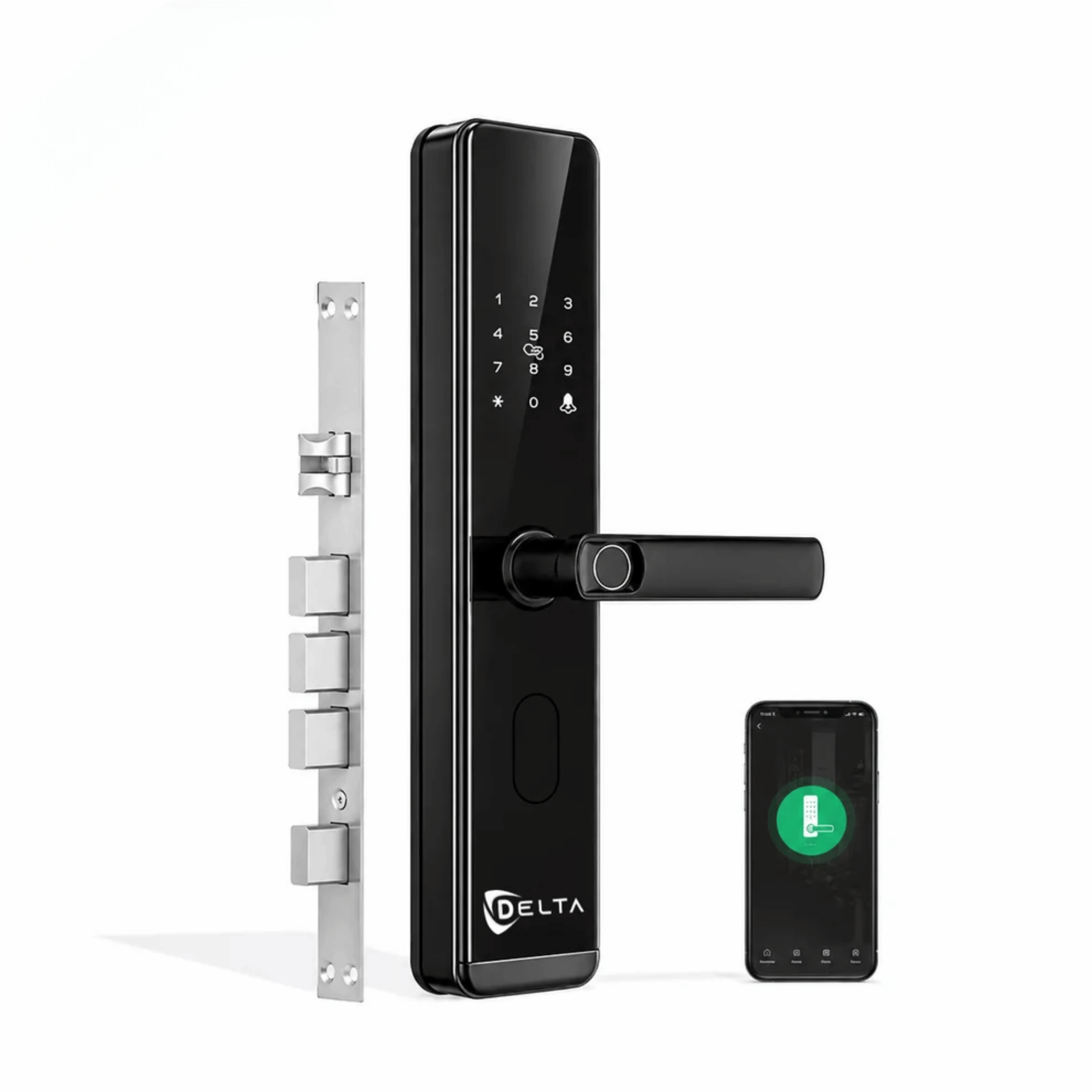
The smart door lock price in India has fallen dramatically, and more importantly, the entry price has fallen. A capable fingerprint and keypad lock now starts around ₹13,000 with the C1 Pro. Camera models sit in the middle. Flagship face recognition runs toward ₹35,000.
What that means practically: a smart lock is now a decision, not an investment. It's in the same mental bracket as a good mixer grinder or a mid-range phone. You don't convene a family meeting.
Two things worth knowing about smart door lock price in India before you shop:
- Below roughly ₹8,000, be careful. That's the zone where imports with no service network live. The lock isn't the cost. The lock nobody can repair in year two is the cost.
- Installation should be free. Delta includes it across 15,000+ pin codes. If somebody's charging you separately for fitting, that's a flag.
Trend 5: Fingerprint Became the Floor, Not the Ceiling
Worth stating plainly: a fingerprint door lock for home use is no longer a premium feature. It's the baseline. Every serious model has it.
The trend isn't fingerprints arriving. It's fingerprints becoming one option among five.
The modern expectation is redundancy. A good fingerprint door lock for home entrances also gives you PIN, app, RFID card and mechanical key. Not because fingerprints fail often, but because they fail predictably: wet hands after a bath, monsoon humidity, a cut on your thumb, a child whose prints are too small to read reliably.
The practical upshot: don't pay extra for a fingerprint door lock for home use in 2026. Pay attention to what surrounds it.
Trend 6: It Stopped Being a Metro Thing
The most under-reported smart door lock trends India has seen recently is geographic.
Until fairly recently this was a Delhi, Mumbai, Bangalore, Hyderabad story. Now the growth is in Ludhiana, Indore, Coimbatore, Bhubaneswar, Nagpur. Delta servicing 15,000+ pin codes reflects that shift rather than causing it.
Two reasons, and neither is about technology:
- Service networks reached tier 2 and tier 3 cities. Once somebody can actually fix it locally, the purchase stops being a gamble.
- Everyone already trusts biometrics. Aadhaar did more to normalize fingerprint authentication in India than any lock company ever could. A generation of people already accept that a fingerprint is an identity.
What's Overhyped
I said I'd be honest, so:
- Voice unlocking. Shouting at your door in a corridor while neighbors listen is not the future. Voice is fine for status checks. It's a poor unlock method.
- Wi-Fi on every single door. It drains batteries meaningfully. Your main door, yes. Your bedroom door, why?
- Ecosystem promises. "Works with everything" usually means "works with some things, badly." Check the specific integrations you actually use.
- Feature-count marketing. The number of unlock methods on the box is not a quality signal. Build quality and service are, and neither photographs well.
Any brand telling you their lock has zero tradeoffs is selling, not informing.
What This Actually Means If You're Buying
Cutting through all the smart door lock trends India is currently generating, here's the practical filter:
- Match the lock to a real problem. Elderly parents who struggle with fingerprint sensors? Face recognition earns its price. Constant deliveries? Camera model. Neither? A solid keypad lock is genuinely enough, and the lowest smart door lock price in India that comes with real service beats a flagship that doesn't.
- IP65 and metal construction, because our weather has not modernized.
- Service network over spec sheet. Every time.
- Warranty in writing. Delta's 2 year replacement plus lifetime tech support is the benchmark to measure others against.
The Bottom Line
The real story in smart lock trends 2026 isn't face recognition or AI or cameras. It's that this stopped being a technology purchase and became a household one.
The locks got good enough that the conversation moved on. Nobody's asking whether they work anymore. They work. The question now is just which problem you're solving, and whether somebody will answer the phone the day it needs attention.
That's a boring place for technology to arrive at. It's also exactly where every genuinely useful technology eventually lands.
Your uncle was wrong, by the way. It's been five years and it's still working.