
Think about a normal Tuesday in your flat.
The maid arrives at nine, and somebody has to be awake to let her in. The cook comes at eleven, by which time everybody has left, so there is a key with the neighbor, or under the shoe rack, or an arrangement involving the watchman that everybody has agreed not to think about too hard. A parcel arrives at two and goes back to the warehouse. Your daughter gets home at four and rings the bell for a while before remembering the key in her bag. You get home at eight, your husband at ten, and both of you carry a key copied at least twice by people neither of you can now name.
That is not a security system. That is a series of workarounds a city forced on you, one compromise at a time.
This is the real reason keyless smart locks have moved from luxury to sensible in Indian cities, and it has little to do with technology being exciting. Smart locks for urban homes are spreading because the metal key was built for a way of living most urban households no longer live.
Keys Were Built on an Assumption That No Longer Holds
A physical key assumes one of two things is always true. Either somebody is home to open the door, or the person who needs to get in is carrying the key. For most of history in most Indian homes, one of those held. Households were larger, someone was around, and the door was rarely a problem to solve.
Look at the modern flat and the assumption collapses. Both adults work. The household is small. The people who legitimately need access on a given day include a maid, a cook, a driver, a delivery agent, a plumber on Thursday, your mother visiting from Pune, and a teenager who loses things. None of them are you, none of them are home, and no sensible number of key copies solves it.
So people improvise. A key with the neighbor. A key under the mat. A key with the watchman. Each is a small hole in your smart home security, and you already know it, which is why you feel faintly uneasy every time you do it.
A keyless door lock does not add technology to your door. It removes the improvisation. Every other benefit of a digital door lock follows from that.
The Rotating Cast Problem
Here is what changes when access stops being an object and becomes a setting. This is the practical case for smart locks for urban homes, and it is less about the door than about the calendar.
Your maid gets a code that works from eight to eleven, weekday mornings. Not at midnight. Not on Sunday. Your cook gets her own code on her own schedule, which means you also know which of them was in the house at eleven forty, because the log tells you. That is not about distrust. It is that when something goes missing, the alternative to a log is a suspicion, and a suspicion is a much worse thing to have in a house.
The plumber gets a code for Thursday afternoon that dies on Thursday evening, whether you remember to do anything or not.
And when somebody leaves your employment, you delete them. No locksmith, no awkward conversation about returning a key, no wondering. This one capability does more for the real smart home security of an urban flat than any amount of hardware strength, because the realistic threat to your home was never a burglar with a drill. It was the eleventh key you forgot about, and a smart door lock for home use makes that eleventh key impossible.
Deliveries, and Why This Became Urgent
The other thing that changed is that a modern city home receives strangers constantly. Groceries in ten minutes. Food twice a day. Parcels most days. Somebody is at your door far more often than at any point in history, and you are usually not there. The missed delivery, the call while you are in a meeting, the parcel left with a watchman who has thirty of them, all of it is friction that did not exist twenty years ago and now defines urban life.
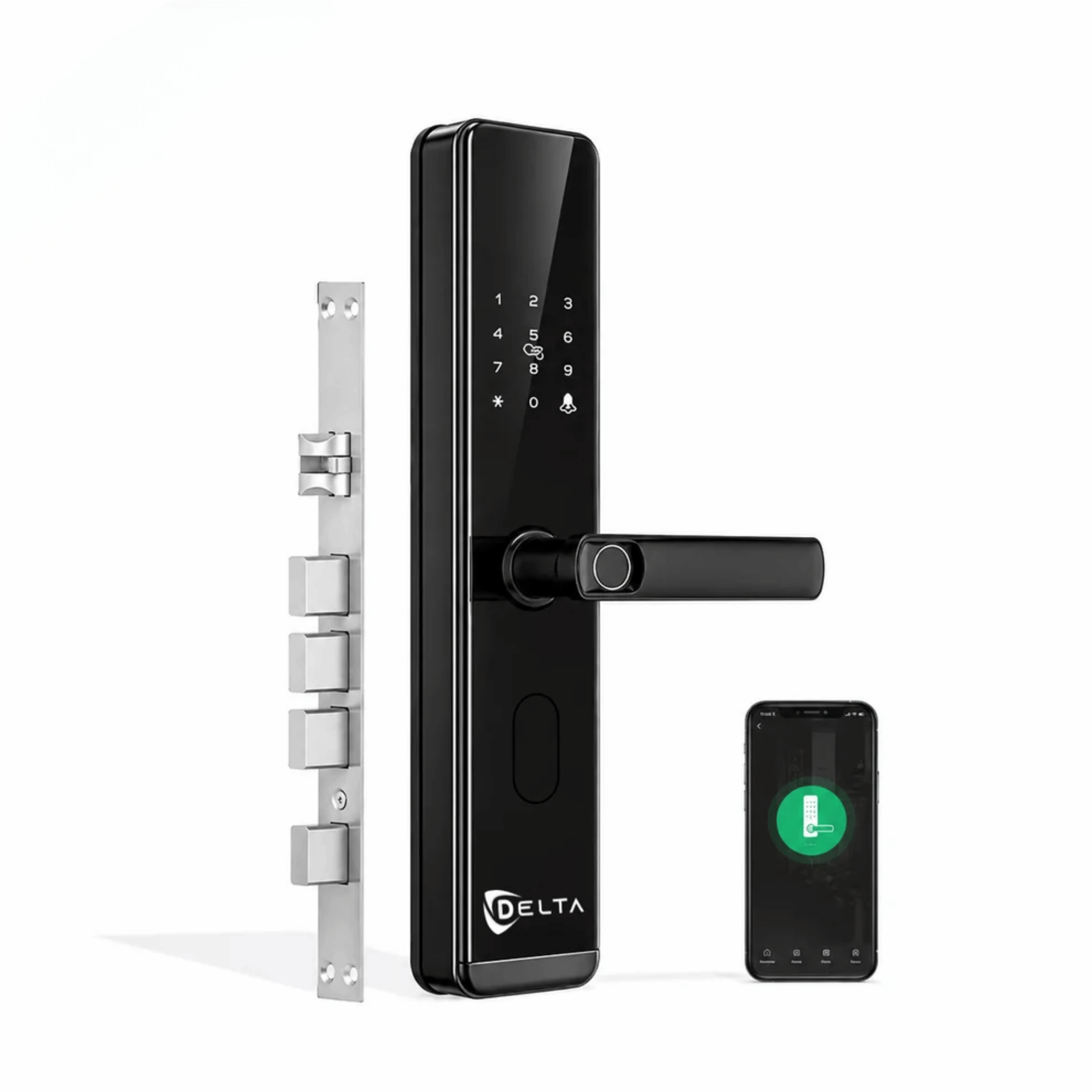
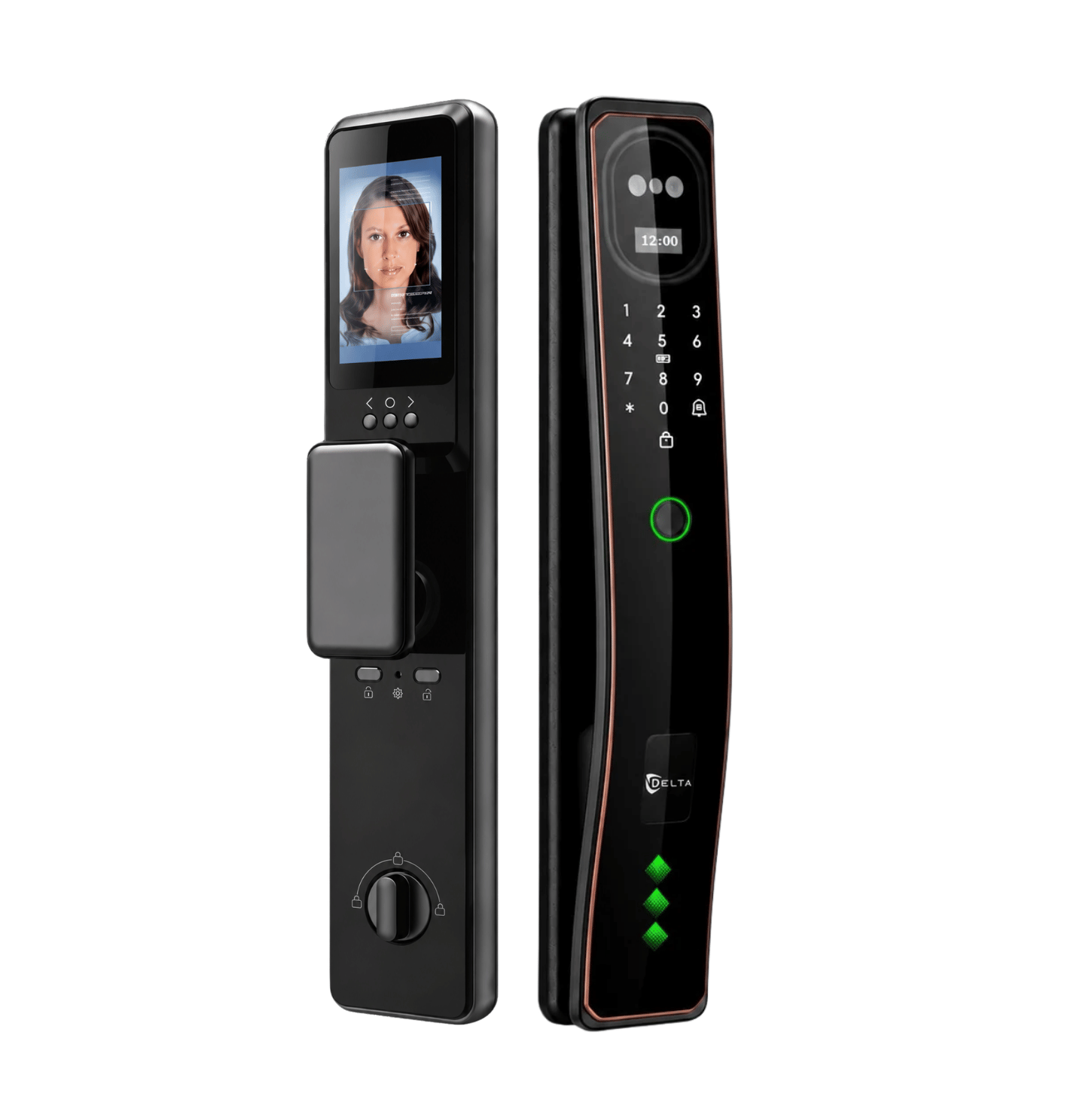
A smart door lock for home use with a built in camera, like Delta's X20 or X30, makes that manageable. You see who is there, you talk to them, you tell them where to leave it. A two way intercom sounds like a small feature until the third time you use it, at which point it becomes the reason you would not go back.
The Real Driver: Children and Elderly Parents
If you want to know why urban families actually buy these, it is usually not deliveries and definitely not gadget enthusiasm.
It is a nine year old who gets home before her parents and will lose a key, because she is nine. A fingerprint solves that permanently. She cannot leave her finger on the school bus.
It is a parent in their seventies living alone across town, struggling with a stiff lock and worrying about getting out in a hurry. Or a parent living with you, who cannot manage a key reliably anymore but manages a face or a fingerprint without thinking about it.
This is the emotional center of the category, and why a digital door lock stopped being a purchase for early adopters and became one for families. The people buying are not thinking about technology. They are thinking about a specific person.
The Spare Key Problem Is Specifically Urban
There is nowhere to hide a spare key in a flat. No garden, no flowerpot, no gate. There is a shared corridor with fifteen doors on it, a shoe rack everybody can see, and a doormat that is the single most predictable hiding place in human history.
So the urban spare key lives with a neighbor, which works until you fall out with them or they travel, or with the society office, which is less a security arrangement than a hope.
Smart locks for urban homes solve this differently. Your backup is not a hidden object. It is a PIN in your head, the app on your phone, or a code you generate and send from your office in thirty seconds. Every keyless door lock still keeps a mechanical override for emergencies, and that key should live outside your home entirely, in a car glove box or at your parents' place, not under the mat where the whole building can find it.
What Urban Buyers Should Actually Look For
Flats have their own requirements, and they are not a bungalow's.
- Check door thickness first. Most flat doors work, but measure rather than assume. Quality locks need 35mm to 40mm minimum.
- Multiple access methods matter more in shared households. Fingerprint for you, PIN for the cook, RFID card for your mother who does not want an app.
- Battery life over everything. Four to six months on a rechargeable pack, with weeks of warnings before it dies. Power cuts are irrelevant, since a digital door lock does not run on mains.
- Noise matters in a flat, oddly. A lock that announces itself loudly at eleven at night in a shared corridor is one your neighbors will remember.
- Service network, always. A cheap import nobody can repair in year two is not a saving. Delta covers 15,000+ pin codes with free installation, a 2 year replacement warranty and lifetime tech support.
- Start sensible. The C1 Pro at ₹12,990 does everything a typical urban flat needs. Face recognition is worth it for elderly parents, not because it is impressive. Real smart home security is about matching the lock to an actual problem.
The Honest Bit
Anybody telling you a keyless door lock has no downsides is selling.
Wet fingers fail, so after a bath or in heavy monsoon you will use the PIN sometimes. Installation quality matters, which is why a professional should fit it rather than your building's carpenter. And it needs ten minutes of attention a quarter, which is small but not zero.
None of that changes the case. It just means buying one properly rather than buying the cheapest marketplace listing.
The Bottom Line
Cities changed the shape of the day. Everybody in a household now arrives at a different hour, and half the people who need to get in do not live there.
The key never adapted, and it could not. It is a piece of metal that has to be carried, copied, hidden and chased, and every one of those verbs is a small failure waiting for its moment. A smart door lock for home use is simply the version of a key that needs none of them.
Keyless smart locks are becoming essential in urban homes for an unremarkable reason. They fit how people actually live now, and the key stopped fitting a while ago. Most of us kept working around it because we had not noticed there was an alternative.
Your Tuesday could be considerably simpler than it is.