

Quick question. How many keys to your office exist right now?
Not how many you issued. How many exist.
Most business owners can't answer that, and the honest reason is uncomfortable. There's the set you handed out. There's the spare the previous admin had cut, twice, because people kept losing theirs. There's whatever the housekeeping vendor's team passes around between shifts. There's the one that guy from accounts still has, the one who left in November, the one everybody meant to collect during his exit formalities and nobody actually did.
That's your security perimeter. A pile of ₹40 pieces of metal, floating around the city, in an unknown quantity, held by people you may no longer employ.
This is why digital door locks for offices have stopped being a nice-to-have in India and started showing up in serious operational budgets.
The Key Problem Nobody Actually Costs Out
Physical keys feel free. That's the trap. The costs are real, they're just scattered across your P&L where nobody adds them up.
- Rekeying after every sensitive exit. Somebody leaves on bad terms and you change the locks. That's a locksmith, downtime, and new keys for everyone.
- Admin time. Issuing, tracking, collecting, chasing. Small per instance, brutal per year.
- Zero accountability. Somebody opened the store room on Sunday. Who? You will never know. There is no log. There is only a hunch.
- Lost key drama. Somebody's stuck outside at 8am with fifteen people waiting behind them.
- The insurance conversation. Try explaining an untracked key inventory after a theft claim.
None of these show up as a line item called "keys." They show up as friction, and you've normalized it. The first thing an office digital door lock does is make those costs visible by removing them.
What Actually Changes With a Digital Lock
Here's where an office digital door lock earns its money. Not through gadgetry, but through control you simply cannot have with metal.
Access That Expires On Its Own
An intern gets 9am to 7pm, weekdays, for three months. After that, their code stops working. Nobody has to remember to do anything.
Contractors get a PIN valid for exactly the two days they're renovating. The AC service guy gets a code for Tuesday morning. It dies Tuesday afternoon, on its own, whether you thought about it or not.
That's the shift. Access becomes a setting, not an object.
You Finally Get a Log
Every open, every close, time stamped, tied to a person. When something goes missing from the store room, you're not interrogating your team based on vibes. You're reading a record.
For most businesses, this alone justifies the switch. A proper office access control system converts "somebody must have" into "here's exactly what happened at 9:47pm."
Revoking Takes Eight Seconds
Somebody resigns badly on a Friday evening. With keys: you're calling a locksmith, or you're spending the weekend hoping.
With a smart door lock for office use: you open the app and delete them. Done before you've left the parking lot. No locksmith, no rekeying, no cost, no hoping.
This is the single biggest argument for modern office security solutions, and it's worth sitting with for a second. The thing that used to be an expensive emergency becomes a tap.
Onboarding Stops Being a Chore
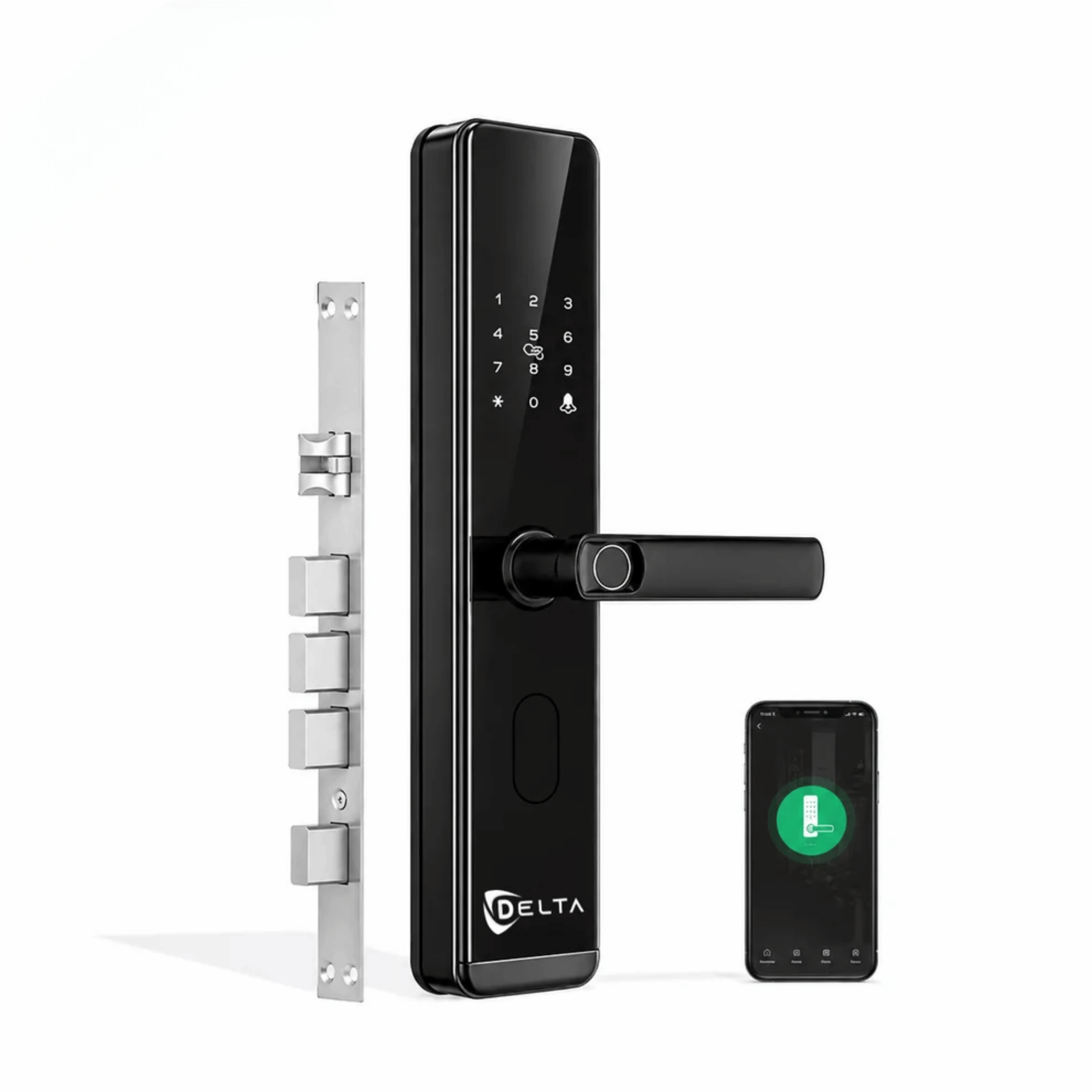
New hire on Monday? Add their fingerprint or issue their RFID card during induction. No key cutting, no waiting, no "we'll sort it out next week." Their office ID card becomes the key, which is how it should have worked all along.
Multiply that across forty hires a year and the admin savings alone make any decent digital door lock India sells look reasonable.
Not Every Door Deserves the Same Lock
This is where most businesses get it wrong. They either lock nothing properly or they over-spend on every door equally. Sensible office security solutions are zoned, and the right office digital door lock for your server room is not the right one for a stationery cupboard.
Think in tiers:
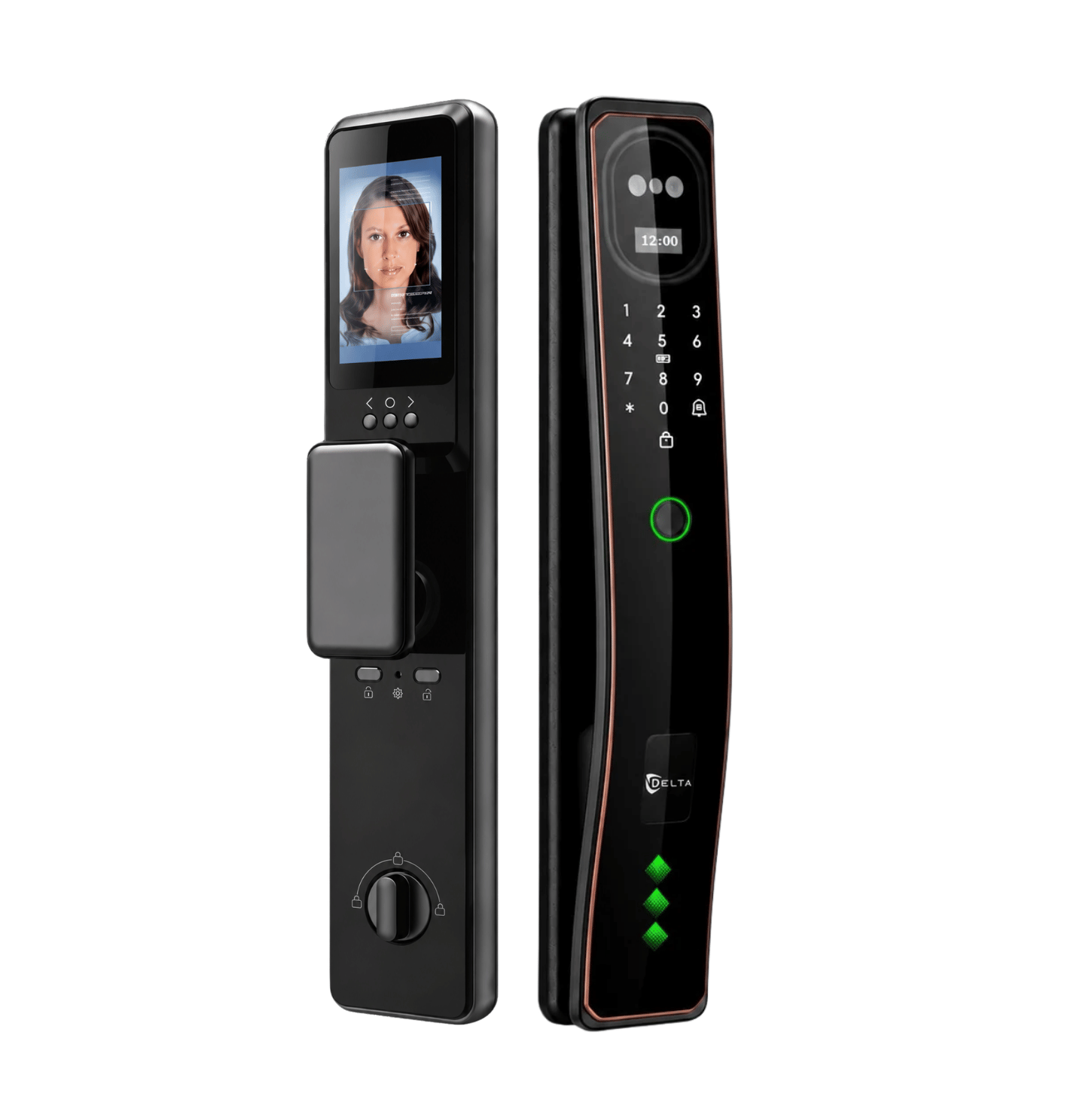
- Main entrance. Highest traffic, highest visibility. Worth the strongest hardware you'll buy. A camera model like the X30 or X20 lets you see who's at the door and speak to them via two way intercom, which matters at a reception nobody's manning at 8pm.
- Server room, cash room, HR records. Low traffic, high sensitivity. This is where a strict office access control system matters most. Three people have access. It's logged. It's audited. That's it.
- Store rooms and utility spaces. Moderate. Fingerprint or PIN is plenty.
- Cabins and meeting rooms. Often a simple keypad model like the C1 Pro at ₹12,990 does everything you need.
You don't need an X90 Ultra AI with 3D face recognition on a stationery cupboard. Spend where the risk is.
Smart Locks for Commercial Buildings: When the Maths Changes
If you're running multiple floors, a co-working setup, or a warehouse alongside your office, the calculation shifts. Smart locks for commercial buildings need a few things a home lock never worries about, and your office access control system has to hold together across all of them:
- Consistent hardware across doors, so your team learns one system, not six
- Bulk user management, because adding 40 people one at a time is nobody's Tuesday
- Wi-Fi connectivity for centralized control and notifications
- Tamper alarms and intruder alerts that reach the right person, not a phone in a drawer
- A service network that can actually show up. Delta covers 15,000+ pin codes with free installation, which matters when your Pune branch has a problem and you're sitting in Ludhiana. Smart locks for commercial buildings live or die on this.
That last point is the one procurement teams underestimate. A cheap import with no support isn't a saving, it's a liability with a warranty card.
The Objections You're Going to Hear
Let's deal with these honestly, because someone in your next meeting will raise them.
"What if the power goes out?" These run on batteries, not mains. Power cuts are irrelevant. Batteries last four to six months and warn you for weeks before they're done. There's a mechanical key override as backup, kept with whoever you decide should have it. One key, one person, tracked. Which is rather the point.
"What if it gets hacked?" Nobody is hacking your office lock. They'd break a window, which is faster and requires no skill. Security on any digital door lock India sells comes down to changing default PINs and not using 1234. The genuine risk to your office isn't a hacker, it's the eleven untracked keys currently in circulation.
"It's expensive." Compare one smart door lock for office use against a single rekeying event, plus the admin hours, plus one incident you couldn't investigate. It typically pays for itself in year one, then keeps paying.
"Our staff won't adapt." They already unlock their phones with a fingerprint fifty times a day. This is not the barrier you think it is. In practice, resistance to digital door locks for offices lasts about a week, and then people quietly start resenting every other door in the building.
How to Actually Roll It Out
Don't do the whole office at once. It's unnecessary and it makes the project feel enormous.
- Start with your highest-risk door. Server room, cash room, whichever keeps you up at night.
- Run it for a month. Let people get used to it. Work out your access policy in a low-stakes environment.
- Do the main entrance next. By now your team is comfortable and you know what you're doing.
- Expand outward to cabins and store rooms as the budget allows.
- Write down your access policy. Who gets what, who approves, what happens at exit. The smart door lock for office doors is the easy part. The policy is what turns hardware into an actual office access control system.
And put "revoke digital access" on your exit checklist, right next to laptop return. That's the step that makes the whole system real.
The Bottom Line
The case for Digital Door Locks for Offices isn't really about technology. It's about the gap between who you think can enter your office and who actually can.
Every business has that gap. Keys guarantee it. You cannot manage what you cannot count, and nobody can count their keys.
A good digital door lock India businesses can actually get serviced closes that gap and keeps it closed, automatically, without anybody remembering to do anything. That's what separates real Office Security Solutions from the theatre of a lock anybody with ₹40 and ten minutes can defeat.
The businesses making this switch aren't chasing a trend. They're just tired of not knowing the answer to a very simple question.
So, how many keys to your office exist right now?