

There was a time when a smart door lock felt like something you saw in a hotel lobby or a tech executive's apartment and thought, nice idea, maybe someday. That time has passed. What started as a premium novelty has, over the course of a few years, become something Indian homeowners across income brackets and city tiers are actively searching for, budgeting for, and installing on their front doors.
The shift is not driven by trends or marketing. It is driven by a simple and growing awareness that the traditional lock and key system Indian homes have relied on for generations is not doing the job it once seemed to do. And that a smart door lock for home is not just more convenient than a key. It is fundamentally more secure, more controllable, and more suited to the way Indian families actually live.
Smart lock necessity in India is no longer a talking point. It is a lived reality for millions of households, and the number is growing every single month.
The Traditional Lock Has a Problem Most Homeowners Prefer Not to Think About
Walk into any hardware shop in India, and you can have a duplicate key made in under ten minutes for virtually any standard lock. No identification required, no questions asked. The person making it could be you, your domestic help, a previous tenant, or someone who borrowed the original for an hour while you were not paying attention.
This is not a fringe security risk. It is a structural weakness in the entire key-based access model that most Indian homeowners have simply normalized because there was no better alternative available. A traditional lock with a key gives you the appearance of security. A smart door lock that Indian families are now choosing gives you actual, verified, access-controlled security.
The difference matters most in the scenarios that matter most: a break-in that exploits a duplicated key, an ex-tenant who never returned the spare, a service provider who copied your key during a visit. None of these threat vectors exists when your home uses biometric or PIN-based authentication. You cannot duplicate a fingerprint at the local hardware shop.
From Urban Apartments to Tier 2 Cities: Smart Lock Adoption Is Broadening
Five years ago, the conversation around smart locks for Indian homes was largely concentrated in premium apartments in metros. Today, geography has expanded significantly. Homeowners in Jaipur, Coimbatore, Nagpur, Kochi, and dozens of other cities are buying and installing smart locks at a pace that reflects genuine demand, not just aspiration.
The reasons are the same across geographies, though the weight assigned to each varies. In densely populated urban apartments, real-time access monitoring and tamper alerts are the primary draw. In independent houses in smaller cities, the combination of keyless convenience and biometric security feels like a meaningful quality of life upgrade. In households with elderly members or young children, the ease of use without a physical key is the deciding factor.
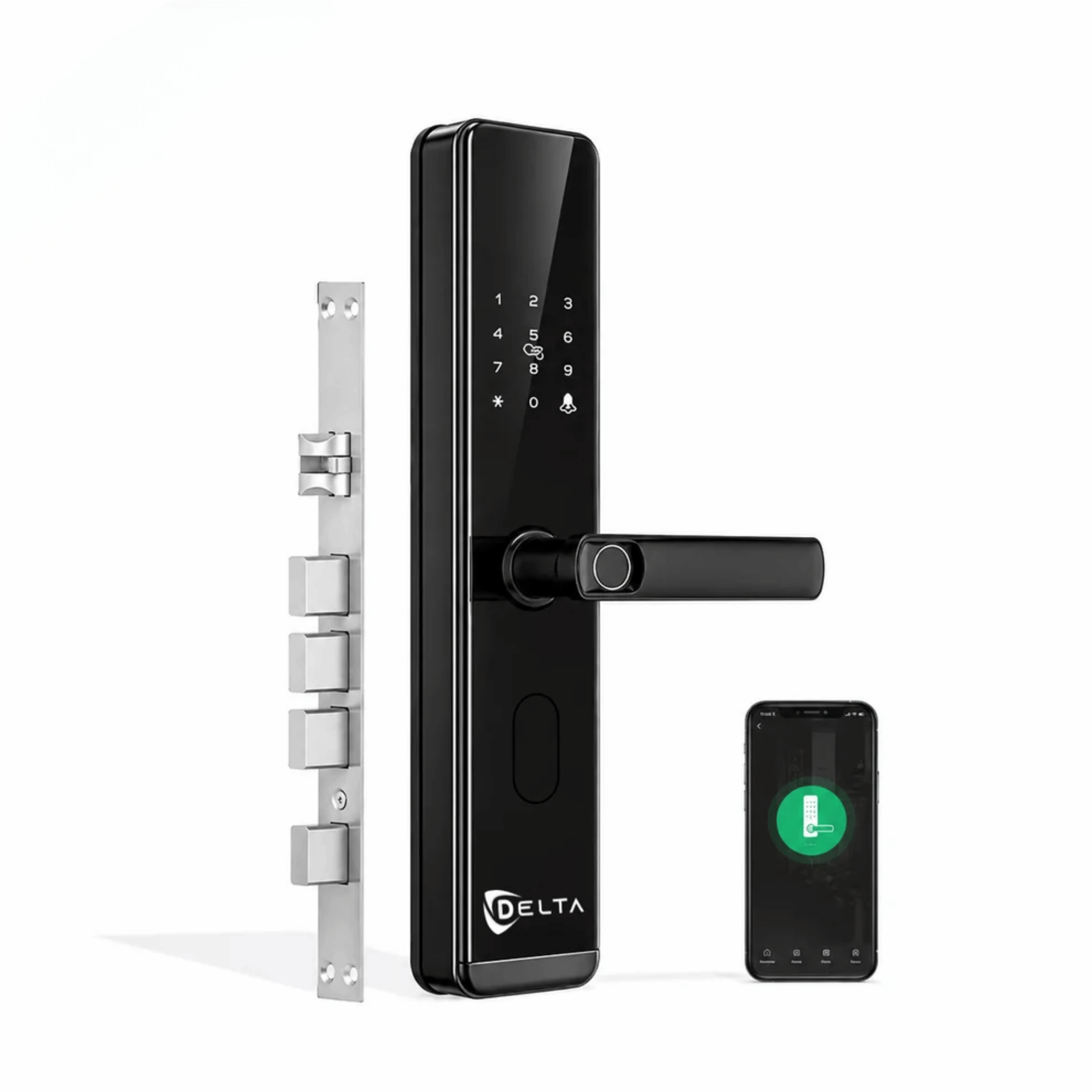
The best smart lock in India does not serve one type of household. It serves all of these, and the product range available today reflects that breadth. Entry-level digital door lock systems starting under Rs. 7,000 bring smart lock benefits to first-time buyers. Mid-range and premium models add face recognition, remote access, video doorbells, and home automation integration for homeowners who want the full connected home experience.
The Home Security Upgrade India Actually Needs
A home security upgrade in India is often discussed in terms of CCTV cameras, security guards, and gated community infrastructure. These are valuable, but they are external to your home. They monitor what happens outside and around your property. They do not control who gets through your front door.
A smart door lock for the home addresses the most fundamental point of entry. It is the one system that directly determines who can and cannot enter your living space. And unlike a camera that records an incident after it happens, a smart digital lock for the home prevents unauthorized entry in the first place through verified authentication, tamper detection, and real-time alerts to your smartphone.
When you frame a smart door lock as a home security upgrade that Indian homeowners need, rather than a convenience gadget, the case for installation becomes considerably more compelling. You are not adding a feature. You are replacing the weakest link in your home's security with the strongest available alternative. The right digital door lock for the home does not just secure your entrance; it gives you complete awareness and control over it.
What a Digital Door Lock System Actually Looks Like Day to Day
One of the reasons smart lock adoption has accelerated in India is that people who have one tell people who do not. The lived experience is simply better in ways that are hard to communicate on a spec sheet but immediately obvious in daily life.
A digital door lock system means your morning begins without a key hunt. It means you can let your child in from school while you are still at the office, triggered by a notification that they are at the door. It means when you go on a trip, you can verify remotely whether the door is locked, grant access to someone you trust for a defined window, and receive an alert if anyone attempts to tamper with the lock while you are away.
A smart lock with fingerprint and PIN gives every family member their preferred access method on the same device. The grandmother who prefers a PIN has her code. The teenager who finds fingerprint access quicker has their biometric registered. A visiting relative gets a one-time code that expires automatically. No key to cut, no spare to manage, no awkward conversation when someone moves out.
This is not a futuristic vision. It is the daily routine of households that have already made the switch, and it is the most persuasive argument for the necessity of smart locks in India that exists. A smart digital lock for the home turns access management from a daily source of friction into something you barely think about.
Remote Access Door Lock: Why It Matters for Indian Homeowners
The feature that Indian homeowners consistently rank as most valuable after installation is remote access. A remote access door lock gives you complete visibility and control over your front door, regardless of where you are in the world.
Consider the scenarios that Indian families navigate regularly. A domestic worker arrives while everyone is at work or school. A courier needs to be let in for a high-value delivery. Parents visiting from another city arrive before you get home. A plumber needs to check something while you are in a meeting. In every one of these situations, a remote access door lock means you can grant access in real time, confirm entry, and revoke access when the task is complete, all from your phone.
This level of control is not available with any traditional lock. It requires a digital door lock for the home with app connectivity, and it is one of the clearest demonstrations of why a smart lock is no longer a luxury but a practical tool for managing a household.
Fingerprint Door Lock India: The Access Method That Changed Everything
The fingerprint door lock has done more to drive smart lock adoption in India than any other single feature. It makes the value proposition immediately intuitive: your finger is always with you, cannot be lost, cannot be duplicated, and takes under half a second to authenticate.
Fingerprint door lock India adoption has been shaped significantly by the quality of the sensors available. Early fingerprint readers were inconsistent, struggled with dry skin and elderly users, and occasionally failed in humid conditions. Today's generation of sensors, including the Swiss FPC fingerprint acquisition system used in Delta Home locks, has solved these problems with adaptive recognition that improves accuracy over time and works reliably across age groups and skin types.
The combination of a smart lock with fingerprint and PIN in a single device covers virtually every household use case. Fingerprint for the adults who use the front door most frequently. PIN for members of the household who prefer it. Backup mechanical key for emergencies. One device, multiple access pathways, zero physical keys required for daily use.
Biometric Digital Door Lock: Where the Technology Stands Today
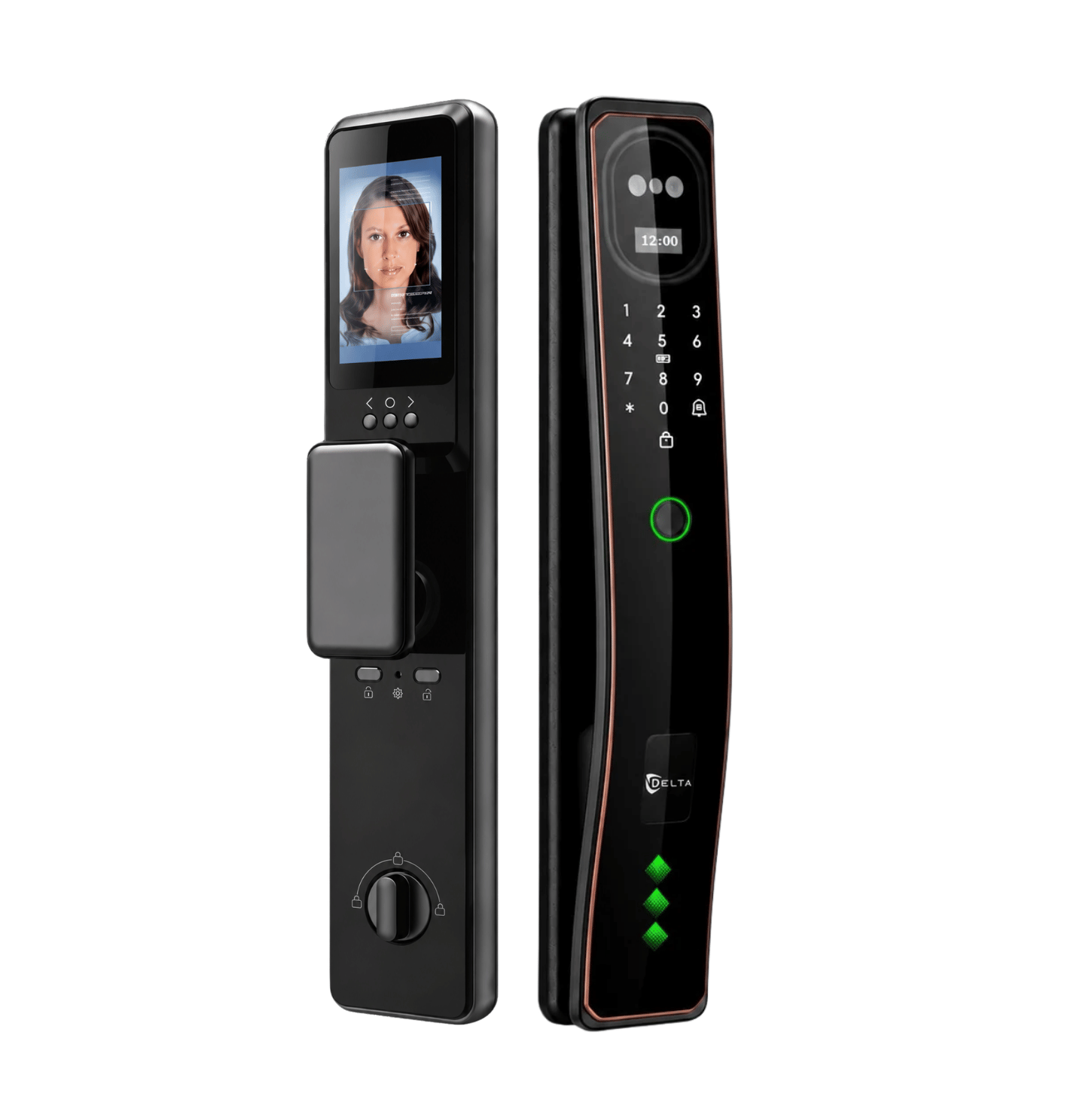
The biometric digital door lock has evolved well beyond fingerprints. Today's premium models available in India incorporate 3D face recognition that maps facial features across tens of thousands of points, palm vein recognition that reads the unique vein patterns beneath the skin, and liveness detection that distinguishes a real person from a photograph or a spoofed biometric.
Delta Home's X30 and X90 models represent what the best smart lock in India looks like at the premium tier. The X90 combines 3D face recognition, palm vein biometric authentication, and a built-in HD video doorbell in a single CNC-machined aluminum alloy unit. It operates offline, connects via built-in Wi-Fi for remote access without a separate gateway device, and links to smart home automation systems through Zigbee connectivity.
This level of technology, available in an Indian product designed for Indian doors and Indian conditions, would have been extraordinary five years ago. Today, it is a product you can buy a smart lock online in India on Delta Home's website with professional installation confirmed within 48 hours.
The Price Conversation: Smart Locks Are Now Within Reach
One of the most persistent misconceptions about smart locks in India is that they are expensive. The reality in 2026 is that a high-quality smart door lock that India homeowners can trust starts at under Rs. 7,000, a price point that is competitive with premium traditional lock brands. Mid-range models with fingerprint recognition, app connectivity, and auto-lock sit between Rs. 12,000 and Rs. 25,000. Premium models with face recognition and video doorbell integration range from Rs. 25,000 to Rs. 35,000 and above.
When you consider that a smart door lock replaces a traditional lock that offers no real-time monitoring, no remote access, no access logs, no tamper alerts, and no protection against key duplication, the value comparison becomes straightforward. You are not paying more for a lock. You are paying a modest premium for a fundamentally superior category of home security.
For those ready to buy a smart lock online in India, Delta Home offers the full range with detailed specifications, customer reviews, and the reassurance of a 2 to 3-year replacement warranty, 24/7 emergency support, and professional installation across metro cities and Tier 1, 2, and 3 cities within 48 working hours of your request.
Delta Home: Building the Smart Lock for Indian Homes India Deserves
The shift from luxury to necessity only works when the product itself is ready for the role. That means hardware built for Indian weather, software that works without a stable internet connection, sensors calibrated for Indian users, and support infrastructure that responds when something goes wrong.
Delta Home has built every product in its range around these requirements. Military-grade aluminum alloy construction. IP-rated weather resistance for monsoon and extreme heat conditions. Offline-first operation with Wi-Fi as an optional enhancement rather than a dependency. A national installation and support network that treats every city, not just metros, as a priority market.
The best smart lock for Indian homes is not the one with the longest feature list. It is the one that works reliably, every day, for every member of your household, backed by a brand that stands behind it. That is the standard Delta Home has set, and the reason more Indian families are choosing to buy smart locks online in India through DeltaHome.in every month.
Visit deltahome. in to find the right model for your home, your door, and your family.