

You know that moment. Arms full of grocery bags, phone wedged under your chin, and you're patting down every pocket looking for keys that have somehow vanished into thin air. Maybe it's raining. Maybe the kids are tugging at your sleeve asking why you're taking so long. It's such a small thing, but it happens constantly, and it's honestly one of the biggest reasons people have started looking into a biometric door lock for their front door.
Here's the basic idea. A biometric door lock skips the physical key entirely and instead uses something that's actually part of you usually a fingerprint to figure out whether you should be let in. Your finger becomes the key. You can't leave it at the office. You can't drop it down a storm drain on your way home.
So What Is a Biometric Door Lock, Really?
Strip away the marketing language and it's pretty simple: a biometric door lock scans something unique to your body and compares it against what's already saved in its memory. For most home setups, that's your fingerprint. No two people have the same one, not even twins, so when the sensor reads your finger and it matches, the door unlocks. Takes about a second.
Compare that to a regular lock. A key can be copied at any hardware counter without you ever knowing. A PIN code can be forgotten, or worse, scribbled on a sticky note somewhere it shouldn't be. A fingerprint door lock sidesteps both problems because, well, you can't really hand someone your fingerprint by accident.
Why People Are Switching to a Finger Lock for Their Door
A few reasons keep coming up when you talk to people who've made the switch.
- You stop losing keys, period. This is usually what sells people first. With a biometric door lock for home use, there's nothing to misplace. No spare hidden under a flowerpot that a stranger could just as easily find.
- It's genuinely faster. Not in a dramatic way, but in the small, annoying-moment way. Hands full, bad weather, kid screaming in the backseat a finger lock for door setups just needs a touch and you're in. No fumbling.
- Security actually goes up, not down. This surprises some people, because anything with the word "digital" in front of it sounds less trustworthy to older generations. But think about it — a metal key sitting in someone's pocket can be lost, found, and used by a total stranger. A fingerprint can't really be "found" the same way.
- You get a record of who's coming and going. A lot of these locks quietly log every unlock. Maybe you want to know what time your teenager actually got home. Maybe you just want to confirm the dog walker showed up when they said they would. It's a small feature, but once you have it, you notice how often you check it.
- Guests and family become easier to manage. Cutting spare keys for everyone gets expensive and hard to track who has one, who lost theirs, who moved out and never gave it back. With fingerprint access, you just add or remove someone from the system. Some models also let you set up a temporary code for guests that expires on its own.
- Landlords and shared housing situations benefit too. If you've ever managed a rental, you know the headache of keys not getting returned. Biometric locks make turnover a lot less stressful a few taps and the old tenant's access is gone.
What Delta Home Actually Offers
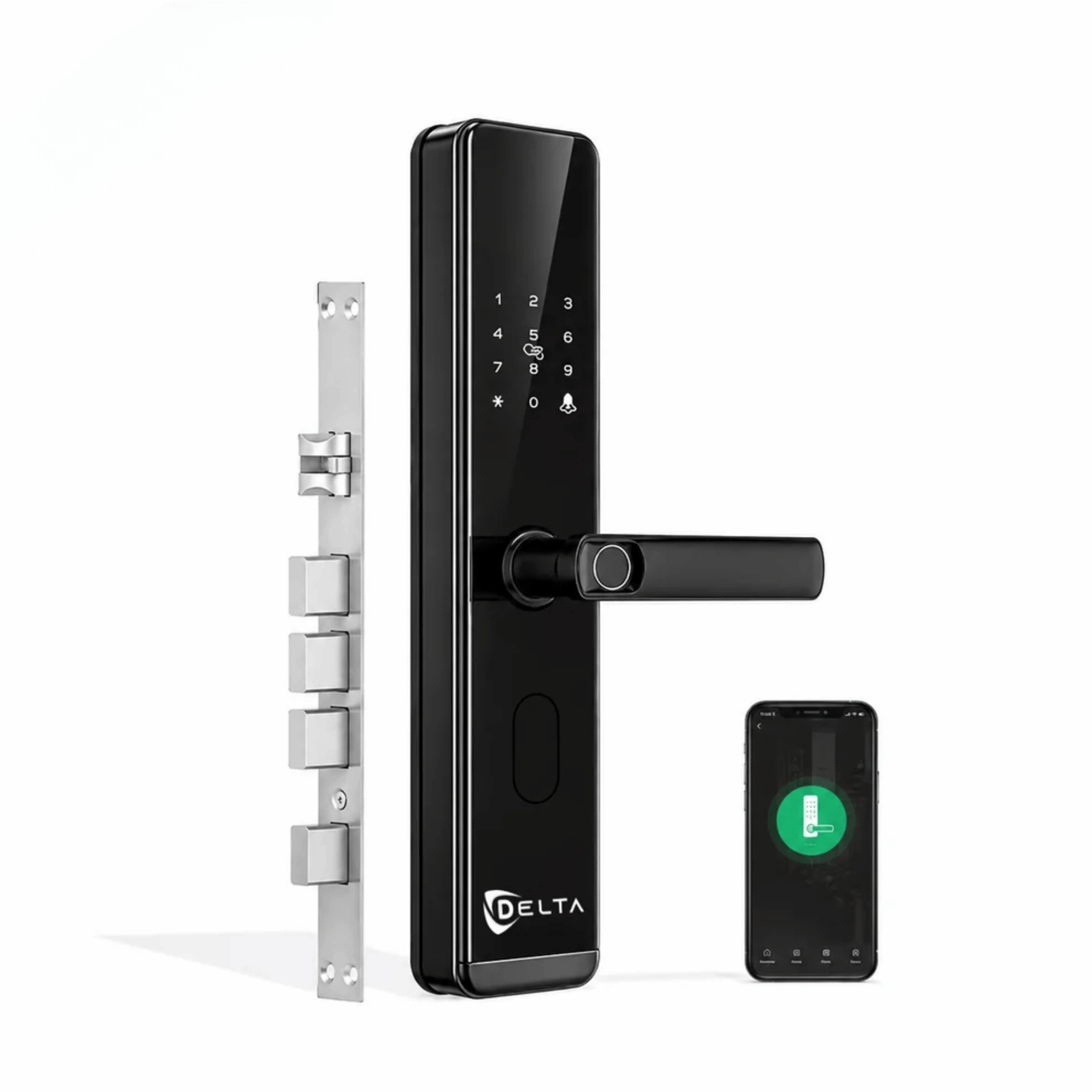
Delta Home has leaned into making fingerprint door lock systems that don't require a tech background to use. You're not going to need a manual sitting open next to you for a week. Setup is generally guided, step by step, often with voice prompts or an on-screen display walking you through adding your first fingerprint.
What stands out is that Delta Home doesn't force you to rely on just the fingerprint sensor alone. Most of their models stack several entry methods together:
- Fingerprint scanning for your everyday, quick entry
- A keypad, in case you want to let someone in with a temporary code
- An app on your phone, so you can lock or check the door status from basically anywhere
- A physical key tucked away as a last resort
That backup matters more than people expect. Phones die. Codes get forgotten at 11pm when you're tired. Having a fallback means you're never actually stuck outside.
On batteries since this is an electronic lock, power is a fair concern. Delta Home locks run on battery, generally with a decent lifespan thanks to low-power components, and they're built to warn you well before the battery actually dies. So you get a notification, not a surprise lockout.
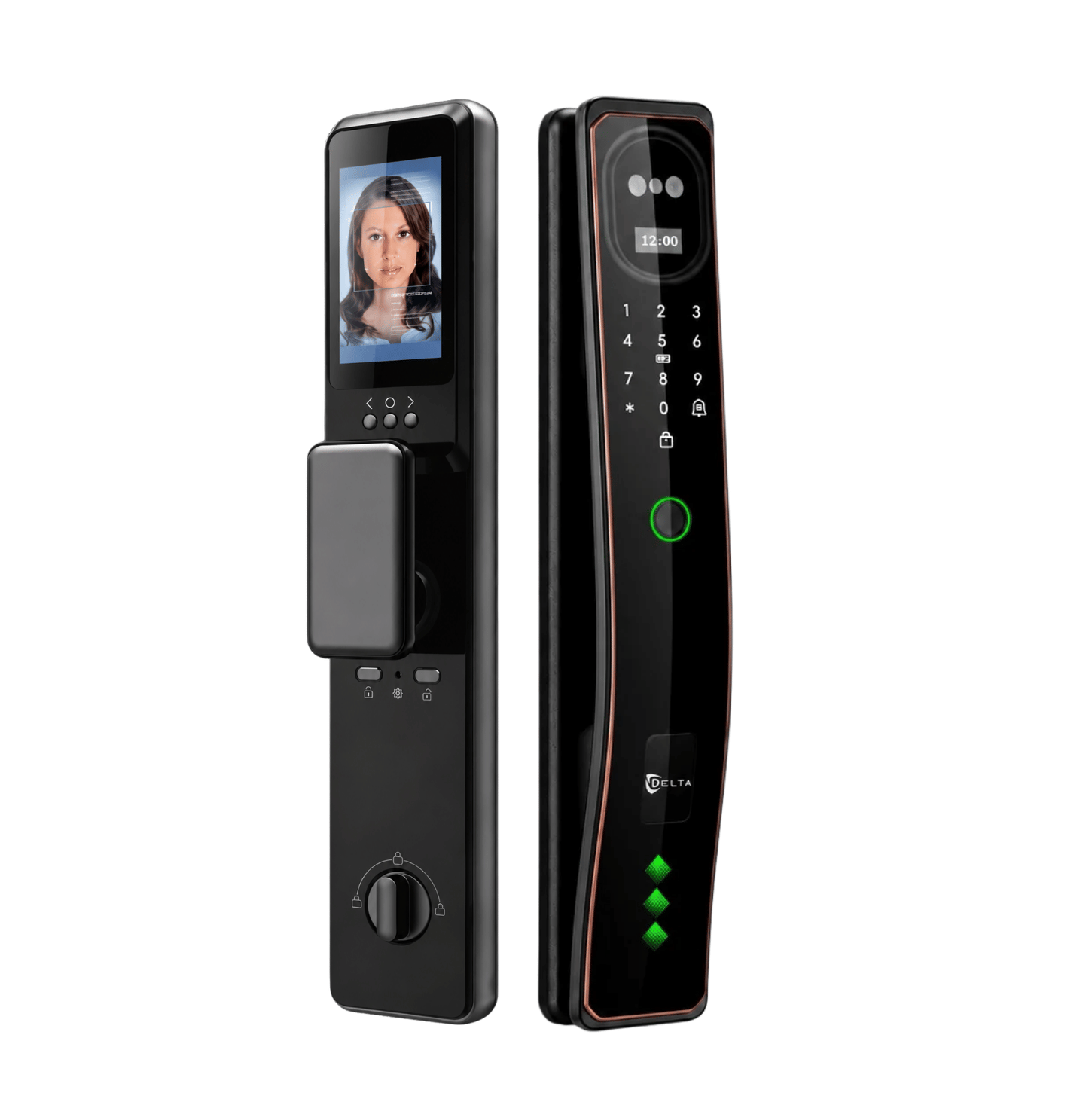
Beyond the basics, some models add extras that go further than just unlocking a door. A couple of their locks come with a built-in video doorbell, so you can see who's outside before you even think about opening it. Others send a push notification to your phone the moment someone unlocks the door. A few of the higher-end options even include facial recognition as an added layer, for anyone who wants that extra bit of reassurance.
Does This Actually Work for Every Household?
This is where biometric locks quietly shine. Families with kids or elderly parents tend to get the most out of them. Kids don't need to carry a key to school where it can get lost in a backpack or handed off to a friend. Grandparents who struggle with a stiff lock or forget PINs can just rest a finger on the sensor no fine motor skills needed, no memory required. It's a small shift, but for households juggling a lot of moving parts already, removing "did everyone get their key" from the daily list is worth more than it sounds.
Final Thoughts
None of this is really about chasing a trend. It's about fixing small, repeated frustrations that most people have just learned to live with the lost key, the forgotten code, the standing-outside-your-own-door moment at the end of a long day.
Delta Home's lineup of fingerprint-based locks takes a problem you deal with constantly and just... removes it. Your fingerprint is already with you everywhere you go. Might as well let it open your front door too.